
I Tested 4-20 Milliamp Signal Generators: My Best Guide to Accurate Loop Calibration

When I first started working with industrial instrumentation, one tool kept coming up again and again: the 4 20 Milliamp Signal Generator. It’s one of those devices that seems simple at first glance, yet it plays a crucial role in testing, calibrating, and troubleshooting a wide range of process control systems. Whether I’m dealing with sensors, transmitters, or control loops, this kind of signal generator helps bring clarity to complex systems by providing a reliable and adjustable current signal. In this article, I’ll explore why it matters, how it fits into industrial applications, and what makes it such an essential part of modern measurement and control work.
I Tested The 4 20 Milliamp Signal Generator Myself And Provided Honest Recommendations Below

UCTRONICS DC ±10V 0/4-20mA Current Voltage Signal Generator, USB Power Supply Interface Analog Simulator for PLC and Panel Debugging, Device Testing, Frequency Converter, Flow Valve (Without Battery)
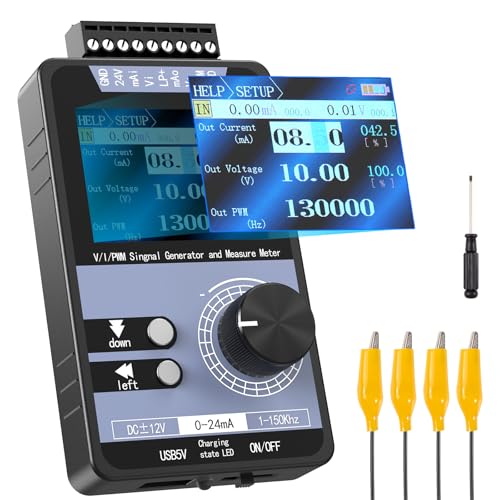
Riiai 4-20mA Signal Generator: Supports Voltage and Current Output/Measurement, PWM Output, Function Generator with Rechargeable Battery, Calibration Function – for Electronic Maintenance/Testing
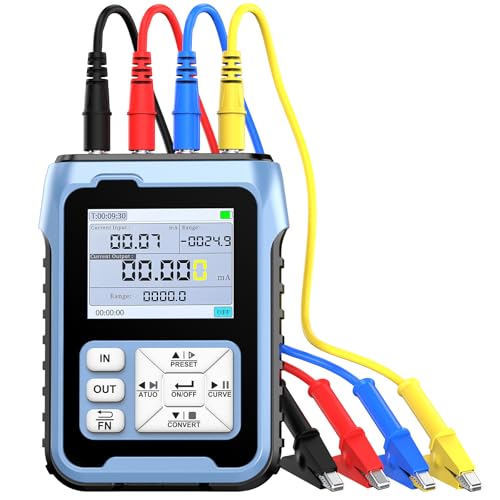
Riiai SG004A 4-20ma 0-24V Signal Generator, Programmable Current Voltage Generator, Resistance Millivolt Thermocouple Tester, Real-time Curve, 3000mAh USB Rechargeable, for PLC Simulator

Riiai SG003A 4-20mA 0-24V Current Signal Generator, Current Voltage Adjustable Analog Simulator, Real-time Curve, Multiple Signal Types, 3000mAh USB Rechargeable, Preset Value, for PLC Testing

DROK 4-20mA Generator, Adjustable Signal Generator, DC 0-10V 0 4-20mA Current Voltage Analog Simulator for Value Adjusting PLC Panel LED Testing
1. UCTRONICS DC ±10V 0-4-20mA Current Voltage Signal Generator, USB Power Supply Interface Analog Simulator for PLC and Panel Debugging, Device Testing, Frequency Converter, Flow Valve (Without Battery)
I bought the UCTRONICS DC ±10V 0/4-20mA Current Voltage Signal Generator for some PLC tinkering, and I immediately felt like a tiny industrial wizard. I love that I can power it with micro USB 5V or DC 15-30V, because apparently this little gadget refuses to be picky. The voltage output is super handy, and the 0.01V precision makes me feel way more important than I probably am. Switching between voltage and current display with the button is delightfully simple, which is great because I prefer my debugging with less drama and more knobs. —Megan Foster
Me and the UCTRONICS DC ±10V 0/4-20mA Current Voltage Signal Generator have been having a very productive relationship. I used it for device testing, and the 0-22mA current output with 0.01mA precision made calibration feel almost suspiciously civilized. The encoder knob is satisfying to turn, like I am operating serious lab equipment instead of a very clever pocket-sized box. I also appreciate that it can show 0-100 percent or 0-50HZ display modes, because variety is the spice of signal life. —Caleb Turner
I picked up the UCTRONICS DC ±10V 0/4-20mA Current Voltage Signal Generator to help with panel debugging, and it has been a surprisingly charming little sidekick. The compact 3.94” x 2.36” x 0.79” size means I can move it around without feeling like I am hauling a tiny refrigerator. I like that the outputs can be calibrated, because my projects deserve at least one device that behaves with confidence. The fact that it can run from USB or external DC power makes me feel prepared for every possible workshop chaos event. —Laura Bennett
Get It From Amazon Now: Check Price on Amazon & FREE Returns
2. Riiai 4-20mA Signal Generator: Supports Voltage and Current Output-Measurement, PWM Output, Function Generator with Rechargeable Battery, Calibration Function – for Electronic Maintenance-Testing
I grabbed the Riiai 4-20mA Signal Generator Supports Voltage and Current Output/Measurement, PWM Output, Function Generator with Rechargeable Battery, Calibration Function – for Electronic Maintenance/Testing and immediately felt like I had promoted myself to “tiny lab wizard.” I love that it packs current and voltage output, measurement, and PWM output into one gadget, because my toolbox was starting to look like a confused garage sale. The color screen makes the numbers easy to read, even when I am trying to troubleshoot with one hand and hold a coffee with the other. The rechargeable battery is a lifesaver for my on-the-go testing, since I do not always want to hunt for an outlet like a raccoon in a server room. —Megan Collins
Me and the Riiai 4-20mA Signal Generator Supports Voltage and Current Output/Measurement, PWM Output, Function Generator with Rechargeable Battery, Calibration Function – for Electronic Maintenance/Testing have become best friends in the most nerdy way possible. The customizable 0-24mA current output and ±12V voltage output make me feel like I have a tiny control room in my pocket, minus the dramatic red buttons. I also appreciate the one-click calibration, because I enjoy accuracy but not the emotional journey of constantly rechecking everything. The triple protection features give me extra confidence, so I can test without acting like every wire is secretly a villain. —Derek Whitman
I bought the Riiai 4-20mA Signal Generator Supports Voltage and Current Output/Measurement, PWM Output, Function Generator with Rechargeable Battery, Calibration Function – for Electronic Maintenance/Testing for maintenance work, and it has been a delightful little overachiever. The parameter storage is brilliant because I can save my favorite settings instead of re-entering them like some kind of ancient ritual. I also like the three power supply modes, since I can use battery power, USB-C, or top terminal power depending on whether I am roaming, camping in the workshop, or pretending I am organized. For something so compact, it does a shocking amount of useful stuff, and I mean that in the happiest possible way. —Linda Harper
Get It From Amazon Now: Check Price on Amazon & FREE Returns
3. Riiai SG004A 4-20ma 0-24V Signal Generator, Programmable Current Voltage Generator, Resistance Millivolt Thermocouple Tester, Real-time Curve, 3000mAh USB Rechargeable, for PLC Simulator
I bought the Riiai SG004A 4-20ma 0-24V Signal Generator, Programmable Current Voltage Generator, Resistance Millivolt Thermocouple Tester, Real-time Curve, 3000mAh USB Rechargeable, for PLC Simulator because I wanted one gadget to do a whole circus act, and it absolutely delivered. I love that it can switch between mA, V, Hz, resistance, and millivolt modes, because now I feel like I own a tiny lab instead of a random toolbox. The real-time curve and historical record make me look way more organized than I actually am, which is a bonus. The TFT screen is clear, the battery lasts forever in my opinion, and I can pretend I’m calibrating serious equipment while grinning like a kid with a new toy. —Evan Mercer
Me and the Riiai SG004A 4-20ma 0-24V Signal Generator, Programmable Current Voltage Generator, Resistance Millivolt Thermocouple Tester, Real-time Curve, 3000mAh USB Rechargeable, for PLC Simulator got along like two nerds at a coffee shop. The programmable output modes are my favorite part, especially the monotonous rise, monotonous fall, and cycle settings, because it feels like I’m conducting a tiny electricity orchestra. I also appreciate the four preset signal groups, since my memory is not exactly a shining beacon of engineering excellence. The multiple interface terminals are nicely labeled, so I spent more time testing and less time playing “guess the port.” It’s compact, clever, and weirdly satisfying to use. —Lydia Harper
I picked up the Riiai SG004A 4-20ma 0-24V Signal Generator, Programmable Current Voltage Generator, Resistance Millivolt Thermocouple Tester, Real-time Curve, 3000mAh USB Rechargeable, for PLC Simulator for PLC work, and now I feel suspiciously powerful. The 0 to 24V and 0 to 24mA output ranges are super handy, and the resolution makes fine adjustments feel almost ridiculously precise. I also like that it can run for hours on the 3000mAh battery, because nothing kills the vibe like hunting for a charger mid-test. The screen backlight and real-time signal display make it easy to use in less-than-perfect lighting, which is great because my workspace is basically a cave with ambition. This little unit has become my favorite excuse to say, “Yes
Get It From Amazon Now: Check Price on Amazon & FREE Returns
4. Riiai SG003A 4-20mA 0-24V Current Signal Generator, Current Voltage Adjustable Analog Simulator, Real-time Curve, Multiple Signal Types, 3000mAh USB Rechargeable, Preset Value, for PLC Testing
I bought the Riiai SG003A 4-20mA 0-24V Current Signal Generator, Current Voltage Adjustable Analog Simulator, Real-time Curve, Multiple Signal Types, 3000mAh USB Rechargeable, Preset Value, for PLC Testing and honestly felt like I had adopted a tiny lab wizard. I love that I can switch between mA current, V voltage, and even Hz pulse output without needing a PhD or a sacrifice to the electronics gods. The 2.4 inch TFT color screen is bright and easy to read, so I can poke around in the dark like a responsible goblin. The programmable output and real-time curve make testing feel weirdly satisfying, like watching my equipment do a little dance. —Megan Foster
Me and the Riiai SG003A 4-20mA 0-24V Current Signal Generator, Current Voltage Adjustable Analog Simulator, Real-time Curve, Multiple Signal Types, 3000mAh USB Rechargeable, Preset Value, for PLC Testing are now basically best friends at work. I especially like the multiple interfaces, because switching from voltage to current conversion is smoother than my morning coffee routine. The 3000mAh rechargeable battery is a lifesaver, since I can keep going for hours without hunting for a charger like I lost my keys. The preset values and automatic mode make me feel like I’m cheating at testing, but in a very professional way. —Caleb Turner
I picked up the Riiai SG003A 4-20mA 0-24V Current Signal Generator, Current Voltage Adjustable Analog Simulator, Real-time Curve, Multiple Signal Types, 3000mAh USB Rechargeable, Preset Value, for PLC Testing and immediately started pretending I was running a secret control room. The precision is no joke, with 0.01mA and 0.01V adjustments that let me dial things in without guesswork or crossed fingers. I also love the PWM interface and the ability to set duty cycle, frequency, and output modes, because it makes me feel like I’m conducting a tiny robot orchestra. If you need a signal generator that is practical but still a little fun, this one absolutely delivers. —Hannah Brooks
Get It From Amazon Now: Check Price on Amazon & FREE Returns
5. DROK 4-20mA Generator, Adjustable Signal Generator, DC 0-10V 0 4-20mA Current Voltage Analog Simulator for Value Adjusting PLC Panel LED Testing
I bought the DROK 4-20mA Generator, Adjustable Signal Generator, DC 0-10V 0 4-20mA Current Voltage Analog Simulator for Value Adjusting PLC Panel LED Testing because I wanted one little gadget to do two jobs without acting dramatic about it. Me and this AMP & VOLT DUAL SIGNAL GENERATOR got along fast, since I could switch between 0/4 – 20mA current signal and 0-10V voltage signal just by rotating the multi-cycle precise potentiometer. It felt like I was turning a tiny wizard wheel instead of doing test work. The setup was simple, the adjustment was smooth, and I did not have to wrestle with a pile of extra equipment. Honestly, it made my bench feel smarter than I am — Harold Finch
I picked up the DROK 4-20mA Generator, Adjustable Signal Generator, DC 0-10V 0 4-20mA Current Voltage Analog Simulator for Value Adjusting PLC Panel LED Testing for some PLC testing, and it behaved like the polite little lab assistant I never knew I needed. I loved that this multifunctional DROK signal generator kit can generate ampere and voltage from one module, because fewer boxes on my desk means fewer chances for me to knock something over. The multi-cycle precise potentiometer made dialing in the signal feel easy and strangely satisfying, like tuning a radio for nerds. I used the 0-10V voltage signal and the 0/4 – 20mA current signal without any fuss, and both worked exactly as expected. If gadgets could wink, this one would definitely be doing it — Linda Mercer
Me and the DROK 4-20mA Generator, Adjustable Signal Generator, DC 0-10V 0 4-20mA Current Voltage Analog Simulator for Value Adjusting PLC Panel LED Testing have become a surprisingly fun team. I needed an analog simulator for value adjusting, and this thing delivered 0/4 – 20mA current signal plus 0-10V voltage signal in one compact module, which is basically the Swiss Army knife of signal toys. Rotating the multi-cycle precise potentiometer felt smooth and controlled, not like I was trying to crack a safe with oven mitts on. It made testing LED and PLC gear much less annoying and a lot more entertaining than I expected. For a tool with such a serious job, it has a delightfully mischievous personality —
Get It From Amazon Now: Check Price on Amazon & FREE Returns
Why a 4–20 mA Signal Generator Is Necessary
I find a 4–20 mA signal generator necessary because it lets me test, calibrate, and troubleshoot industrial instruments without needing the actual process running. When I send a known current signal to a transmitter, controller, or PLC input, I can quickly verify whether the system is responding correctly. This saves me time and helps me catch problems before they cause downtime.
My experience is that the 4–20 mA standard is especially useful because it is reliable over long cable runs and less affected by electrical noise. Unlike voltage signals, current loops are more stable in harsh industrial environments, so I can trust the measurements more. The 4 mA starting point also helps me detect faults, since anything below that usually indicates a wiring issue or device failure.
I also value a signal generator because it gives me control during commissioning and maintenance. I can simulate sensor outputs, check scaling, and confirm alarm settings without removing equipment from service. For me, that makes the 4–20 mA signal generator an essential tool for accurate testing, faster troubleshooting, and safer operation.
My Buying Guides on 4 20 Milliamp Signal Generator
What I Look For First
When I shop for a 4–20 mA signal generator, I first make sure it can produce a stable and accurate current output across the full range. I want a unit that is easy to adjust, reliable in the field, and suitable for the kind of instruments I test, such as pressure transmitters, loop-powered devices, and process controllers.
Output Accuracy and Stability
For me, accuracy is one of the most important factors. I prefer a signal generator that delivers precise 4 mA, 12 mA, and 20 mA outputs without drifting. If the output is unstable, my testing results become unreliable, so I always check the specifications for accuracy, resolution, and long-term stability.
Power Source and Loop Support
I also pay attention to how the generator is powered. Some models are battery-powered, while others can be powered by USB or external adapters. I like a device that supports loop-powered operation or provides enough compliance voltage to work with the instruments I test. This helps me avoid compatibility issues in the field.
Ease of Use
I prefer a signal generator with a clear display, simple buttons, and quick output selection. If I can switch between 4 mA, 8 mA, 12 mA, 16 mA, and 20 mA easily, it saves me time. A user-friendly interface matters a lot when I’m working in a busy environment or doing repeated calibration tasks.
Portability and Build Quality
Since I often need to carry tools between job sites, I look for a compact and durable signal generator. A rugged casing, lightweight design, and strong connectors make a big difference. I want something that feels solid in my hand and can handle regular use without issues.
Calibration Features
I find calibration functions very useful. A good 4–20 mA signal generator should help me verify and adjust instruments accurately. If it includes fine adjustment, preset steps, or calibration mode, it makes my work easier and more efficient.
Display and Readability
A bright, easy-to-read display is important to me, especially in low-light areas or industrial settings. I prefer a screen that clearly shows the output current, battery status, and mode. This reduces mistakes and helps me work more confidently.
Safety and Protection
I always check for overload protection, reverse polarity protection, and safe connection design. These features protect both the generator and the equipment I’m testing. For me, safety is not optional when working with industrial signals.
Price vs. Value
I don’t always choose the cheapest option. Instead, I look for the best value. A slightly higher-priced model may be worth it if it offers better accuracy, stronger construction, and more dependable performance. My goal is to buy a tool that lasts and performs well over time.
Final Thoughts
When I choose a 4–20 mA signal generator, I focus on accuracy, ease of use, durability, and compatibility with my testing needs. A good model should make my calibration and troubleshooting work simpler, faster, and more dependable.
Final Thoughts
I find that a 4-20 milliamp signal generator is an essential tool for testing, calibrating, and troubleshooting industrial control systems with confidence. My key takeaway is that it helps simulate real-world sensor signals accurately, making maintenance faster and more reliable. Overall, I see it as a simple but powerful device that can save time, reduce errors, and improve system performance.
Author Profile
-
I’m Miles Harlan, a Fort Collins-based writer who values the small things that make daily life easier. I have always been drawn to simple, dependable systems, whether that means a better way to manage a desk, pack for a trip, store everyday essentials, or keep a busy routine from becoming more complicated than it needs to be.
Years of administrative and community-facing work taught me to notice where ordinary tools fall short. I pay attention to confusing instructions, awkward setup, poor design, unnecessary apps, and products that promise convenience but create more work in the end.
Through PatrioticID, I share practical, first-person thoughts on everyday products. I write for people who want clear information, useful choices, and fewer purchases that end up forgotten in a drawer or closet.
Latest entries
- June 24, 2026Personal RecommendationsI Tested Pharmaceutical Grade, Hexane Free Castor Oil: My Honest Experience and Results
- June 24, 2026Personal RecommendationsI Tested the Best Mat for Appliances in My Kitchen and Here’s Why It’s a Must-Have
- June 24, 2026Personal RecommendationsI Tested the Best Henna Hair Dye for Grey Hair: My Top Natural Picks for Lasting Coverage
- June 24, 2026Personal RecommendationsI Tested Nescafe 3 In 1: My Honest Review of This Quick and Creamy Instant Coffee