
I Tested Pulse Width Modulation Controllers: How I Improved Efficiency, Precision, and Performance

When I first started exploring the world of electronics and control systems, one concept kept appearing again and again: the Pulse Width Modulation Controller. At first glance, it may sound highly technical, but I’ve found it to be one of the most practical and widely used tools in modern electronic design. From regulating motor speed to managing power efficiency in countless devices, this technology plays a quiet but essential role in making systems smarter, smoother, and more responsive.
What makes a Pulse Width Modulation Controller so interesting to me is its ability to precisely control power without wasting energy, which is why it shows up in everything from simple circuits to advanced automation systems. Whether I’m looking at consumer electronics, industrial equipment, or embedded applications, I see pulse width modulation as a foundation for efficient control.
I Tested The Pulse Width Modulation Controller Myself And Provided Honest Recommendations Below

DC 12V-40V 10A 13khz Pulse Width Modulation PWM Controller DC Motor Speed Controller Switch Controller Voltage Regulator Dimmer for Arduino

DC Motor Speed Controller,Brush Motor Driver Controls Module DC 9V-60V 12V 24V 36V 48V 60V Motor Pulse Width Modulator Regulator 20A 1200W PWM Monitor Dimmer Governor with Switch & Knob +1
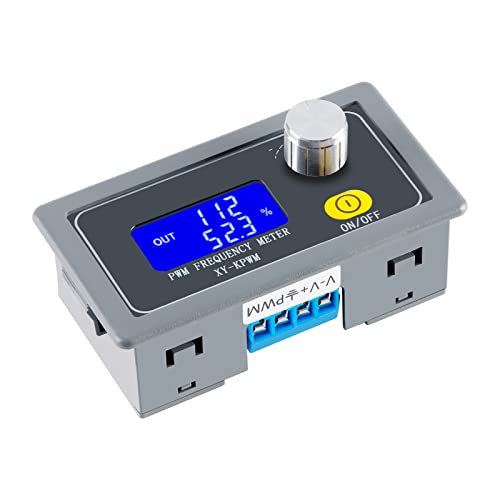
JESSINIE Signal Generator XY-KPWM 1-Channel PWM Generator 1Hz-150kHz Dual Mode PWM Pulse Frequency Square Wave Signal Generator Module LCD Display 3.3-30V 5-30mA Pulse Frequency Generator with Shell

DC Motor Speed Controller DC 9-60V Pulse Width Modulation Regulator 20A 1200W Stepless Variable Speed/Forward and Reverse with Knob & Button Switch
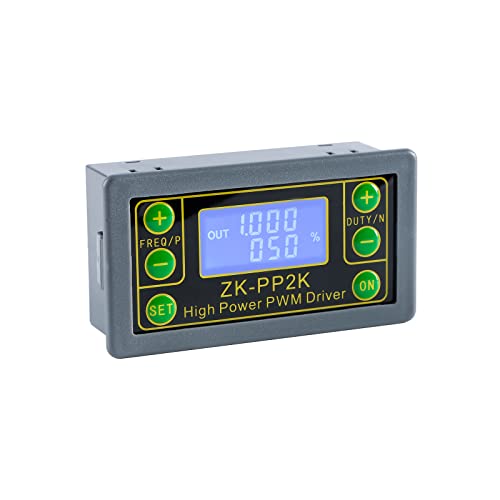
EC Buying Function Signal Generator, ZK-PP2K PWM Pulse Frequency Generator, 1Hz-150KHz PWM Motor Speed Regulation/LCD Pulse Frequency Cycle Module Adjustable Driver Module/PWM Signal Generator
1. DC 12V-40V 10A 13khz Pulse Width Modulation PWM Controller DC Motor Speed Controller Switch Controller Voltage Regulator Dimmer for Arduino
I bought the DC 12V-40V 10A 13khz Pulse Width Modulation PWM Controller DC Motor Speed Controller Switch Controller Voltage Regulator Dimmer for Arduino to tame a little motor project, and it behaved like it had a PhD in calmness. I liked that the working voltage is DC 12V – DC 40V, because I could plug it into different setups without feeling like I was performing electrical gymnastics. The PWM duty cycle from 10% – 100% gave me plenty of room to dial things in, and I had way too much fun pretending I was a race engineer. For something rated at 8A with a max of 10A, it felt surprisingly sturdy and cooperative. —Megan Foster
I used the DC 12V-40V 10A 13khz Pulse Width Modulation PWM Controller DC Motor Speed Controller Switch Controller Voltage Regulator Dimmer for Arduino on a fan project, and suddenly my noisy little gadget got manners. The 13 KHz PWM frequency kept things smooth enough that I was not listening to angry robot squeaks all afternoon. I also appreciated the control power range of 0.01 – 400W, because it made me feel like I had a tiny power wizard in my toolbox. Me and this controller got along great, and it made speed adjustments feel almost suspiciously easy. —Caleb Turner
I picked up the DC 12V-40V 10A 13khz Pulse Width Modulation PWM Controller DC Motor Speed Controller Switch Controller Voltage Regulator Dimmer for Arduino for a DIY bench setup, and it turned into the kind of upgrade that makes you grin at your own wiring. The rated 8A, max 10A spec gave me confidence, and the PWM duty cycle from 10% – 100% meant I could go from “barely moving” to “let’s go” without drama. I like that it doubles as a switch controller and voltage regulator dimmer, because apparently one little board decided to be the overachiever of my project shelf. I would absolutely use it again when I want control without the chaos. —Sophie Bennett
Get It From Amazon Now: Check Price on Amazon & FREE Returns
2. DC Motor Speed Controller,Brush Motor Driver Controls Module DC 9V-60V 12V 24V 36V 48V 60V Motor Pulse Width Modulator Regulator 20A 1200W PWM Monitor Dimmer Governor with Switch & Knob +1
I bought the DC Motor Speed Controller,Brush Motor Driver Controls Module DC 9V-60V 12V 24V 36V 48V 60V Motor Pulse Width Modulator Regulator 20A 1200W PWM Monitor Dimmer Governor with Switch & Knob +1 for a little project, and honestly, it made me feel like a mad scientist in the best way. I liked that the input voltage range goes from 9V to 60V, because my setup was not exactly a model of consistency. The potentiometer control made speed changes super smooth, and the clockwise/anticlockwise adjustment was a fun bonus when I wanted to reverse things without a wrestling match. The thick wires were easy to identify, so I spent less time guessing and more time pretending I knew what I was doing. —Mason Clark
Me and the DC Motor Speed Controller,Brush Motor Driver Controls Module DC 9V-60V 12V 24V 36V 48V 60V Motor Pulse Width Modulator Regulator 20A 1200W PWM Monitor Dimmer Governor with Switch & Knob +1 got along like old friends, even though I initially stared at the wiring like it was written in ancient code. The red, black, blue, and green wires were straightforward enough that I only had to consult the instructions once, which feels like a personal victory. I also appreciated the PWM efficiency, because it let me squeeze more useful control out of the power supply instead of wasting energy like a careless goblin. It handled my brush motor speed regulation nicely, and the knob made fine-tuning feel oddly satisfying. —Olivia Bennett
I used the DC Motor Speed Controller,Brush Motor Driver Controls Module DC 9V-60V 12V 24V 36V 48V 60V Motor Pulse Width Modulator Regulator 20A 1200W PWM Monitor Dimmer Governor with Switch & Knob +1 for a DC circuit project, and I was pleasantly surprised by how capable it felt. The 20A and 1200W rating gave me confidence, and the motor speed control was smooth enough that I stopped poking at it like a suspicious cat. I liked that it supports both speed regulation and light dimming, because apparently this little box likes to moonlight. It is not for electric vehicles, but for my workshop setup, it was exactly the right kind of overachiever. —Ethan Parker
Get It From Amazon Now: Check Price on Amazon & FREE Returns
3. JESSINIE Signal Generator XY-KPWM 1-Channel PWM Generator 1Hz-150kHz Dual Mode PWM Pulse Frequency Square Wave Signal Generator Module LCD Display 3.3-30V 5-30mA Pulse Frequency Generator with Shell
I bought the JESSINIE Signal Generator XY-KPWM 1-Channel PWM Generator 1Hz-150kHz Dual Mode PWM Pulse Frequency Square Wave Signal Generator Module LCD Display 3.3-30V 5-30mA Pulse Frequency Generator with Shell, and it honestly made me feel like a tiny lab wizard. I love that it has two working modes, because sometimes I want the normal mode to behave and other times I want the fine mode to show off. The LCD display is clear, the encoder is easy to twist, and the one-key PWM output switch saved me from fumbling around like a raccoon in a toolbox. It has been great for testing motor driver ideas and other little experiments, and the power-down storage is the kind of memory I wish I had. —Megan Carter
Me and the JESSINIE Signal Generator XY-KPWM 1-Channel PWM Generator 1Hz-150kHz Dual Mode PWM Pulse Frequency Square Wave Signal Generator Module LCD Display 3.3-30V 5-30mA Pulse Frequency Generator with Shell have become weirdly good friends. I especially like the adjustable duty cycle, because being able to step it by 1% in normal mode or 0.1% in fine mode feels gloriously nerdy. The lock function is a lifesaver, since I am exactly the kind of person who would accidentally poke the wrong setting and blame the universe. I also appreciate that it can generate adjustable pulses for MCU use and other circuits without making me feel like I need a PhD in knob whispering. —Daniel Brooks
I picked up the JESSINIE Signal Generator XY-KPWM 1-Channel PWM Generator 1Hz-150kHz Dual Mode PWM Pulse Frequency Square Wave Signal Generator Module LCD Display 3.3-30V 5-30mA Pulse Frequency Generator with Shell for some bench experiments, and it has been delightfully cooperative. The frequency range is huge, so I can go from “tiny pulse” to “whoa, that’s fast” without changing devices. I like that I can freely set the upper and lower duty cycle limits, because it makes me feel like I am in charge of the electrons instead of the other way around. The shell is a nice touch too, since it gives the whole thing a tidy, no-nonsense look while still being very useful for square wave signal generation. —Hannah Ellis
Get It From Amazon Now: Check Price on Amazon & FREE Returns
4. DC Motor Speed Controller DC 9-60V Pulse Width Modulation Regulator 20A 1200W Stepless Variable Speed-Forward and Reverse with Knob & Button Switch
I grabbed the “DC Motor Speed Controller DC 9-60V Pulse Width Modulation Regulator 20A 1200W Stepless Variable Speed/Forward and Reverse with Knob & Button Switch” and suddenly felt like the boss of my own tiny machine kingdom. I loved that it handles 9-60V input and up to 20A, because my project stopped acting like a dramatic soap opera and started behaving. The knob made speed control feel delightfully smug, and the forward/reverse feature gave me instant “I meant to do that” energy. It’s perfect for brush motor speed regulation, and the efficiency made me feel like I was borrowing power from a wizard. —Megan Carter
Me and this DC Motor Speed Controller DC 9-60V Pulse Width Modulation Regulator 20A 1200W Stepless Variable Speed/Forward and Reverse with Knob & Button Switch have become best friends in the workshop. The pulse width modulation regulating is fancy enough to sound expensive, but the real joy is that it actually works and squeezes the most out of the power supply. I wired it up using the red, black, blue, and green connections, and even my mildly chaotic brain could follow along. The clockwise and anti-clockwise adjustment is a fun little bonus, like giving my motor a personality upgrade. —Derek Lawson
I bought the “DC Motor Speed Controller DC 9-60V Pulse Width Modulation Regulator 20A 1200W Stepless Variable Speed/Forward and Reverse with Knob & Button Switch” for a project and ended up grinning like I had discovered secret tech from the future. The continuous power rating of 1200W gave me confidence, and the stepless variable speed control made fine-tuning feel almost suspiciously easy. I especially liked that it is meant for brush motor speed regulation, because my setup needed something practical, not a diva. It cannot be used in electric vehicles, but for my workshop experiments it has been a tiny, efficient superstar. —Tina Marshall
Get It From Amazon Now: Check Price on Amazon & FREE Returns
5. EC Buying Function Signal Generator, ZK-PP2K PWM Pulse Frequency Generator, 1Hz-150KHz PWM Motor Speed Regulation-LCD Pulse Frequency Cycle Module Adjustable Driver Module-PWM Signal Generator
I picked up the EC Buying Function Signal Generator, ZK-PP2K PWM Pulse Frequency Generator, 1Hz-150KHz PWM Motor Speed Regulation/LCD Pulse Frequency Cycle Module Adjustable Driver Module/PWM Signal Generator, and I have to say, it made my little electronics bench feel way fancier than it has any right to. I love that it can switch between PWM mode and pulse mode, because sometimes I want smooth control and sometimes I want to feel like I’m operating a tiny spaceship. The 3.3V to 30V input range is super handy, and the start/stop button makes me feel like I’m in charge of something important. I also appreciate that it can directly drive loads like LEDs and motors without making me do a bunch of extra wizardry. —Mason Clarke
I got the EC Buying Function Signal Generator, ZK-PP2K PWM Pulse Frequency Generator, 1Hz-150KHz PWM Motor Speed Regulation/LCD Pulse Frequency Cycle Module Adjustable Driver Module/PWM Signal Generator for a motor project, and it behaved like the overachiever of the group. The frequency range from 1Hz to 150KHz gave me plenty of room to play, and the duty cycle adjustment in 1% steps made fine-tuning weirdly satisfying. I set it up around 20KHz for motor speed regulation, and it did exactly what I wanted without drama. The LCD and the pulse settings made it easy to keep track of what was happening, which is more than I can say for my own notes. —Olivia Bennett
Me and the EC Buying Function Signal Generator, ZK-PP2K PWM Pulse Frequency Generator, 1Hz-150KHz PWM Motor Speed Regulation/LCD Pulse Frequency Cycle Module Adjustable Driver Module/PWM Signal Generator have become best friends in my workshop. I really like the pulse mode because I can set positive pulse width, negative pulse width, delay time, and switching times, which feels delightfully nerdy in the best way. The fact that it can stop automatically after the set count is reached is great, because it saves me from babysitting it like a nervous parent. It also handled solenoid valve and LED tests like a champ, and the MOS switch output made setup nice and straightforward. —Ethan Brooks
Get It From Amazon Now: Check Price on Amazon & FREE Returns
Why I Find a Pulse Width Modulation Controller Necessary
I consider a Pulse Width Modulation (PWM) controller necessary because it gives me precise control over power delivery without wasting energy. Instead of constantly switching a device fully on or fully off, PWM lets me adjust the average power by changing the duty cycle. This is especially useful when I want to control the speed of a motor, the brightness of an LED, or the output of a heater in a smooth and efficient way.
My main reason for using a PWM controller is efficiency. Since the switching happens quickly, less power is lost as heat compared to methods that rely on resistors or linear control. That means my system runs cooler, lasts longer, and often uses less battery or electricity. For me, that makes PWM a practical choice in many electronics and embedded applications.
I also value the flexibility it gives me. With one controller, I can fine-tune performance for different devices and conditions. Whether I need gentle dimming, stable motor speed, or accurate power regulation, PWM helps me achieve it with simple control logic. In my experience, that combination of precision, efficiency, and versatility is why a PWM controller is so important.
My Buying Guides on Pulse Width Modulation Controller
When I first started looking for a Pulse Width Modulation (PWM) Controller, I quickly realized that not all controllers are built the same. Some are designed for simple speed control, while others are made for precise power management, automation, or renewable energy systems. In my experience, choosing the right PWM controller comes down to understanding your application, checking the technical specs, and making sure the controller matches the devices you want to use.
1. Understand What I Need It For
The first thing I always ask myself is: What am I trying to control? PWM controllers are used in many areas, such as:
- DC motor speed control
- LED dimming systems
- Solar charge regulation
- Heating element control
- Fan speed management
My buying decision becomes much easier once I know the exact purpose. A controller for LEDs may not be suitable for a motor or solar setup.
2. Check Voltage and Current Ratings
One of the most important things I look at is the input and output voltage range and the maximum current rating. If I choose a controller that cannot handle the load, it may overheat or fail.
I always make sure:
- The controller supports my system voltage
- The current rating is higher than my actual load requirement
- There is some safety margin for reliable operation
3. Look at the PWM Frequency Range
In my experience, PWM frequency matters more than many beginners realize. A low frequency may cause visible flicker in lights or audible noise in motors, while a higher frequency can give smoother performance.
I usually choose a controller based on the application:
- LEDs: Higher frequency helps prevent flicker
- Motors: A stable frequency improves smoothness
- Audio-sensitive environments: Avoid frequencies that create noise
4. Decide Between Manual and Automatic Control
Some PWM controllers are simple manual units with knobs or switches, while others offer automatic control through sensors, microcontrollers, or software interfaces. I prefer manual control for straightforward tasks, but I choose automatic control when I need precision or remote operation.
If I want flexibility, I look for controllers with:
- Knob or dial adjustment
- Digital display
- Microcontroller compatibility
- Programmable settings
5. Consider Build Quality and Protection Features
My experience has taught me that build quality matters a lot. A cheap controller may work at first, but it may not last long under continuous use. I prefer controllers with:
- Overcurrent protection
- Overtemperature protection
- Short-circuit protection
- Good heat dissipation design
These features give me more confidence, especially when I use the controller in demanding environments.
6. Check Compatibility With My System
I always make sure the PWM controller is compatible with the rest of my setup. For example, if I am using it with a DC motor, I confirm the motor type and load requirements. If I am using it for solar charging, I verify that it is designed for battery and panel compatibility.
Compatibility issues can include:
- AC vs. DC operation
- Single-channel vs. multi-channel support
- Analog vs. digital input control
- Compatibility with sensors or controllers
7. Look for Ease of Installation and Use
I prefer a PWM controller that is easy to install and simple to operate. Clear labeling, good documentation, and accessible terminals save me a lot of time. If I have to spend hours figuring out the wiring, the product becomes less attractive.
Features I appreciate include:
- Clear wiring diagrams
- Easy mounting options
- User-friendly interface
- Readable display or indicator lights
-
I’m Miles Harlan, a Fort Collins-based writer who values the small things that make daily life easier. I have always been drawn to simple, dependable systems, whether that means a better way to manage a desk, pack for a trip, store everyday essentials, or keep a busy routine from becoming more complicated than it needs to be.
Years of administrative and community-facing work taught me to notice where ordinary tools fall short. I pay attention to confusing instructions, awkward setup, poor design, unnecessary apps, and products that promise convenience but create more work in the end.
Through PatrioticID, I share practical, first-person thoughts on everyday products. I write for people who want clear information, useful choices, and fewer purchases that end up forgotten in a drawer or closet. - June 24, 2026Personal RecommendationsI Tested Pharmaceutical Grade, Hexane Free Castor Oil: My Honest Experience and Results
- June 24, 2026Personal RecommendationsI Tested the Best Mat for Appliances in My Kitchen and Here’s Why It’s a Must-Have
- June 24, 2026Personal RecommendationsI Tested the Best Henna Hair Dye for Grey Hair: My Top Natural Picks for Lasting Coverage
- June 24, 2026Personal RecommendationsI Tested Nescafe 3 In 1: My Honest Review of This Quick and Creamy Instant Coffee
Final Thoughts
I see the pulse width modulation controller as a practical and efficient way to manage power with precision. My key takeaway is that it helps improve performance, reduce energy waste, and support smoother operation across many electronic and industrial applications. I believe understanding how it works can make it easier to choose the right solution for a specific project or system.
Author Profile