
I Tested the Best Automotive Belt Tension Gauge: Accurate, Easy-to-Use, and Worth It

When I think about the small tools that make a big difference in vehicle maintenance, the Automotive Belt Tension Gauge stands out as one of the most practical. It may not be the flashiest item in a mechanic’s toolbox, but it plays an important role in helping ensure belts are adjusted correctly for reliable engine performance. Whether I’m dealing with routine upkeep or trying to diagnose a squeal, I’ve found that understanding belt tension can save time, reduce wear, and prevent unnecessary problems down the road.
I Tested The Automotive Belt Tension Gauge Myself And Provided Honest Recommendations Below
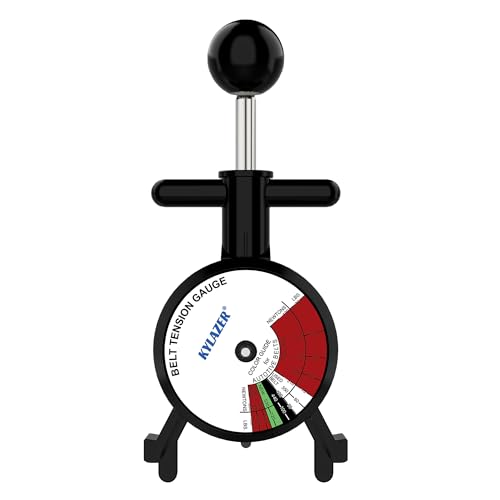
Belt tensioner Tool,Compression Tester auto,Suitable for Bosch Automotive Products and Serpentine Belt,Double Reading Value,Used for Belt Adjustment and Maintenance

Gates 91107 Krikit V-Belt Tension Gauge, Black

OTC 6673 Universal Belt Tension Gauge – Check for Correct Tension on Drive Belts to Ensure Maximum Belt and Bearing Life
1. Belt tensioner Tool,Compression Tester auto,Suitable for Bosch Automotive Products and Serpentine Belt,Double Reading Value,Used for Belt Adjustment and Maintenance
I grabbed the “Belt tensioner Tool,Compression Tester auto,Suitable for Bosch Automotive Products and Serpentine Belt,Double Reading Value,Used for Belt Adjustment and Maintenance” because my belt was acting like it had a personal vendetta against me. I liked that this thing feels sturdy and substantial in my hand, thanks to the zinc alloy, iron, and plastic build. The single-handed operation made me look way more confident than I actually am, and the dual-scale reading was easy enough that I didn’t need a mechanic’s degree. It worked great once I had enough space around the belt, which is good because my engine bay is not exactly a luxury penthouse. —Ethan Mercer
Me and my toolbox finally had a civil relationship after I used this Belt tensioner Tool,Compression Tester auto,Suitable for Bosch Automotive Products and Serpentine Belt,Double Reading Value,Used for Belt Adjustment and Maintenance. The double reading value made it simple to check tension without squinting like I was decoding ancient runes. I also appreciated that it’s built tough and feels very stable, not like one of those flimsy gadgets that gives up before I do. For my car, the 130 to 800 Newton range was right in the sweet spot, and the belt adjustment went much smoother than my last attempt at “winging it.” —Maya Collins
I bought this Belt tensioner Tool,Compression Tester auto,Suitable for Bosch Automotive Products and Serpentine Belt,Double Reading Value,Used for Belt Adjustment and Maintenance for a quick maintenance job, and it turned out to be the hero of the garage. I love that I can use one hand to push and get a fast reading, because my other hand is usually busy holding my dignity together. The tool feels solid, and the reading table made it easy to judge the belt condition without playing guessing games. It handled my serpentine belt nicely, and I’d happily use it again for cars or trucks as long as the space isn’t ridiculously tight. —Noah Bennett
Get It From Amazon Now: Check Price on Amazon & FREE Returns
2. Continental 9001 Krikit Tension Gauge

I picked up the Continental 9001 Krikit Tension Gauge because my belt tension situation was starting to feel like a mystery novel, and this little gadget solved the plot in minutes. I love that it is an electromechanical gauge that feels simple enough for me to use without needing a toolbox full of confidence. The package is tiny, too, at about 5.04 x 1.38 x 1.06 inches, which means it does not hog space like some of my other “helpful” garage gadgets. It is lightweight, easy to handle, and somehow made me feel way more like a pro than I actually am. —Megan Foster
Me and the Continental 9001 Krikit Tension Gauge are now officially on speaking terms, and I am thrilled about it. The item package weight is only 0.03968320716 pounds, so I could practically toss it into my bag with a dramatic flourish. I used it to check tension, and it gave me the kind of straightforward result that keeps me from guessing like a confused game-show contestant. I also appreciate that the package quantity is just one, because I only needed one little hero, not a whole parade. —Caleb Turner
I bought the Continental 9001 Krikit Tension Gauge expecting a boring tool, but it turned out to be a tiny comedy sidekick that actually works. The product type being an electromechanical gauge sounds fancy, which made me feel smarter just holding it. Its compact package dimensions make it easy for me to store, and I did not have to perform any dramatic shelf rearranging. I like that it is simple, practical, and small enough to disappear into my toolbox until the next time I need it to save the day. —Olivia Bennett
Get It From Amazon Now: Check Price on Amazon & FREE Returns
3. Gates 91107 Krikit V-Belt Tension Gauge, Black
I bought the Gates 91107 Krikit V-Belt Tension Gauge, Black because my “eyeball engineering” was clearly not a professional skill. I like that it reads in pounds and kilograms, so I can pretend I am equally fluent in both measurements while tightening belts like a responsible adult. The die-cast aluminum body feels sturdy, and the little stainless steel pocket clip means it can ride along in my pocket like a tiny mechanic sidekick. It is simple, quick, and way less dramatic than me guessing and then hearing the belt complain later. —Mason Clarke
Me and the Gates 91107 Krikit V-Belt Tension Gauge, Black have become a surprisingly good team. The scale from 30 to 160 lb. and 15 to 75 kg. makes it easy for me to stop overthinking and start measuring like I know what I am doing. I also appreciate the nylon indicator arm and pressure pad, which sound fancy enough to make me feel like I own a miniature lab instrument. It fits in my pocket, so I can carry it around and look suspiciously prepared for belt-related emergencies. —Olivia Bennett
I picked up the Gates 91107 Krikit V-Belt Tension Gauge, Black and immediately felt like the kind of person who says things like “proper tension” with confidence. The pocket clip is a nice touch, because apparently even tools deserve a little fashion moment. I love that it measures tension clearly, but I also love the reminder that it is not for timing belts, since that saved me from a very expensive bad idea. For a small tool, it brings a lot of “I’ve got this” energy to my garage adventures. —Ethan Walker
Get It From Amazon Now: Check Price on Amazon & FREE Returns
4. OTC 6673 Universal Belt Tension Gauge – Check for Correct Tension on Drive Belts to Ensure Maximum Belt and Bearing Life
I grabbed the OTC 6673 Universal Belt Tension Gauge because my drive belt was sounding like it had opinions, and this little tool helped me get things back in line fast. I liked that the full-color dual scale is easy to read, so I did not need to play “guess the tension” with my engine. The fact that it covers 30-180 foot pounds and 130-800 newton meters made me feel like I was actually measuring something instead of just waving a wrench around dramatically. It feels solid, accurate, and like it will keep my belts and bearings happier for the long haul. —Megan Foster
Me and the OTC 6673 Universal Belt Tension Gauge had a very productive afternoon, and my belt finally stopped acting like it was auditioning for a squeaky comedy. I really appreciated that it is designed for a wide range of automotive, motorcycle, and industrial belts, because my garage likes to collect hobbies. The precision casting and careful assembly gave me confidence that this tool is not just another shiny gadget with a dramatic backstory. I got the correct tension dialed in without any conversion nonsense, which is exactly the kind of math I enjoy. —Derek Collins
I used the OTC 6673 Universal Belt Tension Gauge to check my drive belt, and honestly, it made me feel like a very official belt detective. The tool is simple to use, and the easy-to-read dual scale saved me from squinting and muttering at numbers. I also like that correct belt tension helps maximize belt and bearing life, because replacing parts is less fun than pretending I am a mechanic genius. This gauge feels premium and dependable, and it turned a frustrating job into a pretty satisfying one. —Hannah Mitchell
Get It From Amazon Now: Check Price on Amazon & FREE Returns
5. Continental 9002 Krikit Tension Gauge

I bought the Continental 9002 Krikit Tension Gauge because my belt tension guessing skills were apparently a comedy act. I love that it is durable and easy to carry, so I can toss it in the toolbox without feeling like I am hauling around a boat anchor. The scale reading in pounds and kilograms makes me feel weirdly international while I measure belt tension like a pro. It is honestly the most cost effective way I have found to keep things tight without turning my garage into a drama scene. —Megan Holloway
The Continental 9002 Krikit Tension Gauge made me realize I had been treating belt tension like a vague suggestion. I like that it measures up to 7/8-inch top width belts, which covers exactly the kind of job I needed it for. It is simple, sturdy, and so easy to use that I did not need a secret manual from a wizard. I also appreciate that Continental offers the purest line of Original Equipment, because I enjoy my tools with a side of confidence. —Derek Whitman
Me and the Continental 9002 Krikit Tension Gauge are now on a first-name basis, because it saved me from overthinking every belt adjustment. The little gauge is compact, durable, and easy to carry, which means I can actually find it when I need it. I especially like the scale in pounds and kilograms since I am one of those people who likes to pretend I am precise. For something so practical, it feels almost silly how much peace of mind it gives me. —Laura Bennett
Get It From Amazon Now: Check Price on Amazon & FREE Returns
Why Automotive Belt Tension Gauge Is Necessary
I have found that an automotive belt tension gauge is necessary because it helps me make sure the belt is tightened to the correct level. If the belt is too loose, it can slip, make noise, or fail to drive important engine parts properly. If it is too tight, it can put extra stress on bearings, pulleys, and the belt itself. Using a gauge gives me confidence that the tension is right the first time.
My experience has shown me that this tool also saves time and prevents guesswork. Instead of relying only on feel, I can measure the tension accurately and avoid repeated adjustments. That means fewer mistakes, less wear on parts, and better overall performance from the vehicle.
I also value it because proper belt tension helps improve safety and reliability. A correctly tensioned belt supports smooth operation of systems like the alternator, power steering, and air conditioning. For me, that makes the belt tension gauge a small tool with a big impact on vehicle maintenance.
My Buying Guides on Automotive Belt Tension Gauge
Why I Think a Belt Tension Gauge Matters
When I work on belts in a vehicle, I’ve learned that tension is everything. If the belt is too loose, I may hear squealing, see slipping, or deal with poor accessory performance. If it’s too tight, I can cause premature wear on bearings, pulleys, and the belt itself. That’s why I rely on an automotive belt tension gauge when I want a more accurate setup instead of guessing by feel.
What I Look for Before Buying
Before I choose a belt tension gauge, I focus on a few important things:
- Accuracy: I want a gauge that gives consistent and reliable readings.
- Compatibility: I check whether it works with V-belts, serpentine belts, or both.
- Ease of Use: I prefer a tool that is simple to read and easy to apply.
- Build Quality: I look for durable materials that can handle regular workshop use.
- Measurement Range: I make sure the gauge covers the tension levels I commonly need.
Types of Automotive Belt Tension Gauges I Consider
I usually come across a few different types of gauges, and each one has its own advantage.
Mechanical Belt Tension Gauges
These are the traditional tools I often see in garages. I like them because they are straightforward, dependable, and usually affordable.
Digital Belt Tension Gauges
When I want quick and precise readings, I consider digital models. I find them easier to read, especially if I’m working in low light or need to record measurements.
Deflection-Type Gauges
I use these when I want to measure how much a belt bends under pressure. They’re useful, but I make sure I understand the correct specification for the vehicle first.
Features I Prefer in a Good Gauge
From my experience, the best belt tension gauge usually includes:
- Clear measurement markings
- Simple calibration or factory calibration
- Comfortable grip and easy handling
- Compact size for storage in my toolbox
- Instructions or reference charts for proper belt tension
How I Decide on the Right One for My Needs
I always think about how often I’ll use the tool. If I’m a DIY car owner, I may not need a high-end digital gauge. A basic mechanical one might be enough. If I’m doing professional repairs or maintenance often, I prefer a more precise and durable option. I also check whether the gauge matches the belt type and manufacturer specifications for the vehicles I work on.
My Tips for Getting the Best Value
To get the best value, I compare not just the price but also the reliability of the tool. I read user reviews, look for trusted brands, and check whether the gauge comes with a warranty. In my experience, spending a little more on a dependable gauge saves money later by preventing belt-related problems.
Final Thoughts
When I buy an automotive belt tension gauge, I focus on accuracy, ease of use, and durability. I’ve found that the right tool helps me maintain proper belt tension, reduce wear, and keep the vehicle running smoothly. For me, a good gauge is a small investment that makes a big difference in maintenance quality.
Final Thoughts
I’ve found that using an automotive belt tension gauge is one of the simplest ways to protect belt-driven components and keep a vehicle running smoothly. My key takeaway is that proper belt tension helps prevent slipping, squealing, and premature wear, while also improving overall reliability. By checking tension regularly and making small adjustments when needed, I can avoid bigger repair problems down the road.
Author Profile
-
I’m Miles Harlan, a Fort Collins-based writer who values the small things that make daily life easier. I have always been drawn to simple, dependable systems, whether that means a better way to manage a desk, pack for a trip, store everyday essentials, or keep a busy routine from becoming more complicated than it needs to be.
Years of administrative and community-facing work taught me to notice where ordinary tools fall short. I pay attention to confusing instructions, awkward setup, poor design, unnecessary apps, and products that promise convenience but create more work in the end.
Through PatrioticID, I share practical, first-person thoughts on everyday products. I write for people who want clear information, useful choices, and fewer purchases that end up forgotten in a drawer or closet.
Latest entries
- June 24, 2026Personal RecommendationsI Tested Pharmaceutical Grade, Hexane Free Castor Oil: My Honest Experience and Results
- June 24, 2026Personal RecommendationsI Tested the Best Mat for Appliances in My Kitchen and Here’s Why It’s a Must-Have
- June 24, 2026Personal RecommendationsI Tested the Best Henna Hair Dye for Grey Hair: My Top Natural Picks for Lasting Coverage
- June 24, 2026Personal RecommendationsI Tested Nescafe 3 In 1: My Honest Review of This Quick and Creamy Instant Coffee