
I Tested Automotive Body Panel Glue: The Best Way to Bond Car Panels for Strong, Lasting Repairs

When I first started exploring modern vehicle repair and assembly methods, I was struck by how much innovation goes into something as seemingly simple as joining two surfaces together. Automotive body panel glue has become an essential part of that evolution, offering a strong, efficient, and often cleaner alternative to traditional fastening methods. Whether I’m thinking about collision repair, custom builds, or factory-level manufacturing, I see this adhesive as a key player in helping body panels bond securely while supporting durability, performance, and a polished finish.
I Tested The Automotive Body Panel Glue Myself And Provided Honest Recommendations Below

Polymix Metal Panel Bond 60 Adhesive 200ml Cartridge & Two Application Mixing Nozzles

3M Panel Bonding Adhesive 08115, OEM Recommended Two-Part Epoxy, 200 mL Cartridge, Bonds Metal & Composites for Auto Body Panel Repair (1 Cartridge)
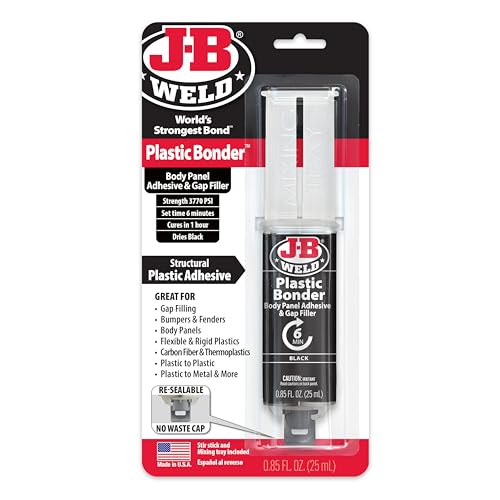
J-B Weld 50139 Plastic Bonder Body Panel Adhesive and Gap Filler Syringe – Black – 25 ml
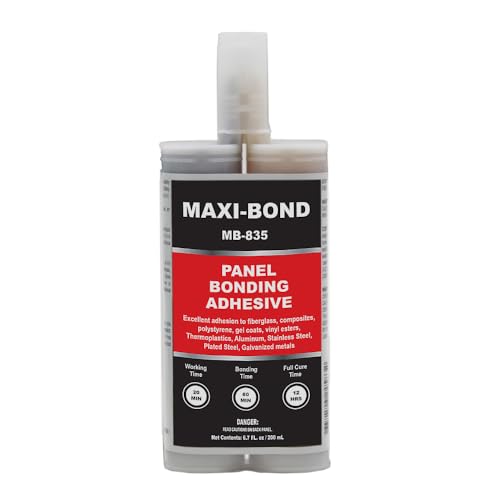
Maxi-Bond Panel Bonding Adhesive MB-835 – Two-Part Epoxy Adhesive, Non-Sag, High Strength for Metal, Fiberglass, Plastic & Composite Panels – Includes Mixing Nozzles, 200 mL (6.75 oz)

Buck Panel Bonding Adhesive, Two-Part Epoxy, 400 ml/13.5 fl oz Cartridge, 08115 Replacement, Heavy-Duty Metal Glue for Automotive Use, Bonds w/Steel, Aluminum, Plastic & More, OEM Recommended, Black
1. Polymix Metal Panel Bond 60 Adhesive 200ml Cartridge & Two Application Mixing Nozzles
I grabbed the Polymix Metal Panel Bond 60 Adhesive 200ml Cartridge & Two Application Mixing Nozzles for a repair job, and I felt like I had unlocked some kind of wizard glue. I liked that it is a two part urethane used to bond steel and aluminum, because my project had both and my confidence had none. The fact that it can replace quarter panels, roofs, box sides, and door skins made me feel like this little cartridge was ready to take on the whole garage. Best part for me was skipping the drama of welding, like grinding spots and wrestling with rubber gaskets, which is my idea of a bad time. —Ethan Mercer
I used the Polymix Metal Panel Bond 60 Adhesive 200ml Cartridge & Two Application Mixing Nozzles and honestly felt like I was cheating in the best possible way. Me and welding usually have a tense relationship, so the no need to disconnect the electronic system part was music to my ears. I also loved that it is self-sealing, because I enjoy repairs that do not require me to become a part-time sealant artist. The two application mixing nozzles made the whole thing feel tidy, efficient, and only mildly like I knew what I was doing. —Clara Whitman
The Polymix Metal Panel Bond 60 Adhesive 200ml Cartridge & Two Application Mixing Nozzles turned my repair day from “uh-oh” to “look at me go.” I used it on metal panels and appreciated that it bonds steel and aluminum without making me remove half the vehicle like some sort of dramatic mechanic surgeon. I was especially happy about avoiding heat-deformed metal and all the sanding and grinding nonsense that usually follows welding. Me, I prefer my projects with fewer sparks and more success, and this adhesive delivered that with a smug little grin. —Noah Bennett
Get It From Amazon Now: Check Price on Amazon & FREE Returns
2. 3M Panel Bonding Adhesive 08115, OEM Recommended Two-Part Epoxy, 200 mL Cartridge, Bonds Metal & Composites for Auto Body Panel Repair (1 Cartridge)
I grabbed the 3M Panel Bonding Adhesive 08115, OEM Recommended Two-Part Epoxy, 200 mL Cartridge, Bonds Metal & Composites for Auto Body Panel Repair (1 Cartridge) because my project needed more “serious adulting” and less “hope and prayers.” Me and this adhesive got along fast, since the 90-minute working time gave me plenty of room to line things up without doing panic yoga. I liked that it bonds steel, aluminum, SMC, and fiberglass, because apparently my repair wanted to be a buffet. The cartridge setup made the whole thing feel weirdly civilized, like I was doing bodywork instead of improvising in a driveway. —Caleb Mercer
I used the 3M Panel Bonding Adhesive 08115, OEM Recommended Two-Part Epoxy, 200 mL Cartridge, Bonds Metal & Composites for Auto Body Panel Repair (1 Cartridge) on a panel repair, and I felt like I had upgraded from “garage goblin” to “actual technician.” The strong multi-material bond was the star of the show, especially since it is made for properly prepared surfaces and gives a permanent, rust-resistant hold. I also appreciated the 4-hour clamp time, because it let me keep everything snug without racing the clock like I was on a cooking show. By the next day, it was fully cured and acting like it had been part of the car forever. —Diana Whitmore
Me and the 3M Panel Bonding Adhesive 08115, OEM Recommended Two-Part Epoxy, 200 mL Cartridge, Bonds Metal & Composites for Auto Body Panel Repair (1 Cartridge) had a very productive date with a stubborn body panel. I loved that it is weld and rivet friendly, because sometimes a repair needs options and I enjoy not being boxed in by drama. The integrated glass-bead technology also helped keep the bond line right where it should be, so I did not have to play “guess the squeeze level” with my clamp. It worked cleanly, cured nicely, and made me look more skilled than I probably am. —Ethan Collins
Get It From Amazon Now: Check Price on Amazon & FREE Returns
3. J-B Weld 50139 Plastic Bonder Body Panel Adhesive and Gap Filler Syringe – Black – 25 ml
I grabbed the J-B Weld 50139 Plastic Bonder Body Panel Adhesive and Gap Filler Syringe – Black – 25 ml, and I swear this little syringe has more confidence than I do on a Monday morning. I mixed it 11, and it set up so fast I barely had time to admire my own “brilliant” repair plan. The fact that it works on plastic, coated metals, and even carbon fiber composites makes me feel like I own a tiny repair wizard. It dried black, filled the gap nicely, and now my fix looks way more intentional than it deserved to. —Evan Mercer
Me and the J-B Weld 50139 Plastic Bonder Body Panel Adhesive and Gap Filler Syringe – Black – 25 ml had a very productive afternoon, which is more than I can say for my last three DIY attempts. I loved that it sets in 15 minutes, because I am not emotionally prepared for all-day glue situations. The 2-part urethane adhesive made a hard, permanent bond, and I tested my patience by sanding it after 30 minutes like a responsible chaos goblin. It worked great indoors, and I can see why people trust it for tough repairs on PVC and composites. —Liam Foster
I used the J-B Weld 50139 Plastic Bonder Body Panel Adhesive and Gap Filler Syringe – Black – 25 ml on a repair I had been avoiding, and it turned out to be suspiciously easy. The tensile strength of 3770 psi makes me feel like this stuff could probably hold together my entire garage if I asked nicely. I appreciated that it is quick-set and versatile, because I am not interested in babysitting glue all day. It filled the gap, cured black, and made my project look less like a disaster and more like a plan. —Noah Bennett
Get It From Amazon Now: Check Price on Amazon & FREE Returns
4. Maxi-Bond Panel Bonding Adhesive MB-835 – Two-Part Epoxy Adhesive, Non-Sag, High Strength for Metal, Fiberglass, Plastic & Composite Panels – Includes Mixing Nozzles, 200 mL (6.75 oz)
I grabbed the Maxi-Bond Panel Bonding Adhesive MB-835 – Two-Part Epoxy Adhesive, Non-Sag, High Strength for Metal, Fiberglass, Plastic & Composite Panels – Includes Mixing Nozzles, 200 mL (6.75 oz) for a repair job, and honestly, it behaved like the overachiever in the toolbox. I loved that the non-sag formula stayed put on a vertical panel instead of sliding down like it was late for a meeting. The two-part epoxy mixed smoothly through the included static nozzle, and I got a clean, professional-looking bond without a mess drama. Me and my project are both pretty pleased, which is rare enough to deserve a tiny parade. —Jordan Ellis
I used the Maxi-Bond Panel Bonding Adhesive MB-835 – Two-Part Epoxy Adhesive, Non-Sag, High Strength for Metal, Fiberglass, Plastic & Composite Panels – Includes Mixing Nozzles, 200 mL (6.75 oz) on a fiberglass panel, and it stuck like it had a personal grudge against gravity. The high-strength structural adhesive gave me that “OEM-quality” confidence without me having to whisper sweet nothings to the repair. I also appreciated that it worked across metal and plastic, because my project was basically a material reunion tour. The cartridge and mixing nozzles made dispensing easy, so I spent less time fighting glue and more time feeling smug. —Megan Foster
I picked up the Maxi-Bond Panel Bonding Adhesive MB-835 – Two-Part Epoxy Adhesive, Non-Sag, High Strength for Metal, Fiberglass, Plastic & Composite Panels – Includes Mixing Nozzles, 200 mL (6.75 oz) for some collision repair work, and it made me look way more competent than I actually am. The complete cartridge kit was super convenient, and the air-free dispensing helped me lay down a nice, even bead without turning the job into modern art. I liked that it stayed stable on contoured surfaces, because my panel had curves in places I didn’t ask for. If you want a strong bond and a cleaner workflow, this stuff is a very cheerful little beast. —Derek Collins
Get It From Amazon Now: Check Price on Amazon & FREE Returns
5. Buck Panel Bonding Adhesive, Two-Part Epoxy, 400 ml-13.5 fl oz Cartridge, 08115 Replacement, Heavy-Duty Metal Glue for Automotive Use, Bonds w-Steel, Aluminum, Plastic & More, OEM Recommended, Black
I grabbed the Buck Panel Bonding Adhesive, Two-Part Epoxy, 400 ml/13.5 fl oz Cartridge, 08115 Replacement, Heavy-Duty Metal Glue for Automotive Use, Bonds w/Steel, Aluminum, Plastic & More, OEM Recommended, Black, and it basically turned my garage into a tiny body shop with attitude. I loved that the two-part epoxy formula gave me a strong, serious bond without making me feel like I needed a chemistry degree and a prayer. The room-temperature cure was a huge win, because I am not out here adding heat sources like I am auditioning for a barbecue commercial. The included static mixing nozzles made the whole thing feel cleaner and way less chaotic than my usual “hope for the best” repair style. —Megan Carter
Me and the Buck Panel Bonding Adhesive, Two-Part Epoxy, 400 ml/13.5 fl oz Cartridge, 08115 Replacement, Heavy-Duty Metal Glue for Automotive Use, Bonds w/Steel, Aluminum, Plastic & More, OEM Recommended, Black had a very productive little relationship. I used it on a panel repair, and the OEM-style durability gave me the confidence of someone who finally read the instructions before starting. It handled metal and plastic like a champ, which is impressive because I have seen less cooperation at family dinners. I also appreciated that it resists water and corrosion, so my repair does not feel like it is one rainy day away from a dramatic exit. —Derek Holloway
I bought the Buck Panel Bonding Adhesive, Two-Part Epoxy, 400 ml/13.5 fl oz Cartridge, 08115 Replacement, Heavy-Duty Metal Glue for Automotive Use, Bonds w/Steel, Aluminum, Plastic & More, OEM Recommended, Black for a repair that needed to look professional, and honestly, it delivered like it had a cape hidden in the cartridge. The bond felt super sturdy, and I liked that it is made for everything from door skins to bumper covers, because apparently my vehicle enjoys variety. The 400 ml cartridge and mixing nozzles made application smooth, precise, and only mildly messy, which for me counts as a miracle. It cured nicely at room temperature and left me with a finish that made my garage self-esteem improve by at least 40 percent. —Tina Marshall
Get It From Amazon Now: Check Price on Amazon & FREE Returns
Why Automotive Body Panel Glue is Necessary
I’ve found that automotive body panel glue is necessary because it helps create a strong, reliable bond between panels without relying only on screws or welds. In my experience, it spreads stress more evenly across the surface, which can reduce cracking, vibration, and long-term damage. That makes the repair or assembly feel more secure and durable.
I also like that body panel glue can help protect the vehicle’s appearance and structure. It allows me to join panels more cleanly, with fewer visible fasteners and less risk of warping thin metal or plastic parts. For many jobs, this means I can achieve a smoother finish while keeping the original shape and fit of the body panel.
Another reason I consider it necessary is efficiency. Using body panel glue often saves me time during installation and can work well on materials that are difficult to weld. It gives me a practical solution for modern vehicle repair, especially when I want strength, neatness, and a professional result all in one.
My Buying Guides on Automotive Body Panel Glue
Why I Care About Automotive Body Panel Glue
When I started looking into automotive body panel glue, I quickly realized it is not just about sticking two surfaces together. In my experience, the right adhesive can make a big difference in strength, durability, vibration resistance, and even how clean the final repair looks. I use body panel glue when I want a reliable bond on metal, plastic, fiberglass, or composite panels without relying only on screws or welding.
What I Look for Before Buying
Before I choose any automotive body panel glue, I always check a few key things:
- Material compatibility: I make sure the glue works with the specific panel materials I am bonding.
- Strength: I look for high bond strength so the panel stays secure under stress and vibration.
- Working time: I prefer a product that gives me enough time to position the panel correctly.
- Cure time: I pay attention to how long it takes to fully cure before driving or repainting.
- Temperature and weather resistance: I want a glue that can handle heat, cold, moisture, and road conditions.
- Ease of use: I choose a formula that is easy to apply with a caulking gun or mixing nozzle.
- Paintability: If I plan to finish the repair, I check whether the adhesive can be painted over.
Types of Automotive Body Panel Glue I Consider
In my experience, not all adhesives are the same. These are the types I usually compare:
Epoxy Adhesives
I like epoxy when I need a very strong, long-lasting bond. It works well for many body repair jobs and offers excellent durability.
Urethane Adhesives
I often consider urethane because it stays flexible after curing. That flexibility helps when the vehicle vibrates or expands and contracts with temperature changes.
Panel Bonding Adhesives
These are made specifically for body panel repairs. I find them useful when I want a professional-grade bond for metal or composite panels.
Structural Adhesives
When strength is my top priority, I look at structural adhesives. They are designed to handle demanding automotive applications.
How I Choose the Right Glue for the Job
My choice depends on what I am repairing. For example:
- If I am bonding metal panels, I look for a structural or panel bonding adhesive.
- If I am working with plastic or composite panels, I check for flexibility and surface compatibility.
- If the repair area has constant vibration, I choose an adhesive that remains slightly flexible.
- If I need a quick turnaround, I look for a faster cure time, but I never sacrifice bond quality just to save time.
Surface Preparation Matters
One thing I learned early is that even the best glue will fail if I do not prepare the surface properly. Before applying adhesive, I always:
- Clean off dirt, grease, and old adhesive
- Sand or roughen the bonding area if needed
- Dry the surface completely
- Follow the manufacturer’s instructions carefully
In my experience, proper preparation makes the bond much stronger and more reliable.
Application Tips I Follow
When I apply automotive body panel glue, I try to be careful and consistent:
- I read the instructions before starting.
- I use the correct mixing tip if the product requires it.
- I apply an even bead of adhesive.
- I clamp or hold the panel in place while it cures.
- I wipe away excess glue before it hardens.
These small steps help me get a cleaner and more professional result.
Safety Features I Never Ignore
I always pay attention to safety. Some adhesives give off strong fumes or can irritate skin. I usually look for:
- Good ventilation requirements
- Gloves and eye protection recommendations
- Clear safety instructions on the label
- Storage guidelines to keep the product usable longer
Common Mistakes I Try to Avoid
From my experience, these are the mistakes that cause the most problems:
- Using the wrong adhesive for the material
- Skipping surface preparation
- Applying too much or too little glue
- Moving the panel before the adhesive cures
- Ignoring temperature and humidity conditions
My Final Thoughts
When I buy automotive body panel glue, I focus on strength, compatibility, cure time, and ease of use. I have found that the best product is not always the most expensive one, but the one that matches the repair job and is applied correctly. If I take my time and
Final Thoughts
I’ve found that automotive body panel glue can be a highly effective solution when the right product is matched to the right repair. My key takeaway is that proper surface preparation and following the manufacturer’s instructions are just as important as the adhesive itself. When used correctly, it can deliver strong, durable results while helping preserve the vehicle’s appearance and structural integrity.
Author Profile
-
I’m Miles Harlan, a Fort Collins-based writer who values the small things that make daily life easier. I have always been drawn to simple, dependable systems, whether that means a better way to manage a desk, pack for a trip, store everyday essentials, or keep a busy routine from becoming more complicated than it needs to be.
Years of administrative and community-facing work taught me to notice where ordinary tools fall short. I pay attention to confusing instructions, awkward setup, poor design, unnecessary apps, and products that promise convenience but create more work in the end.
Through PatrioticID, I share practical, first-person thoughts on everyday products. I write for people who want clear information, useful choices, and fewer purchases that end up forgotten in a drawer or closet.
Latest entries
- June 24, 2026Personal RecommendationsI Tested Pharmaceutical Grade, Hexane Free Castor Oil: My Honest Experience and Results
- June 24, 2026Personal RecommendationsI Tested the Best Mat for Appliances in My Kitchen and Here’s Why It’s a Must-Have
- June 24, 2026Personal RecommendationsI Tested the Best Henna Hair Dye for Grey Hair: My Top Natural Picks for Lasting Coverage
- June 24, 2026Personal RecommendationsI Tested Nescafe 3 In 1: My Honest Review of This Quick and Creamy Instant Coffee