
I Tested the Best 120 Film Scanners: My Top Picks for Stunning Medium Format Film Scans

If you’re anything like me, there’s something especially rewarding about bringing medium format negatives back to life with the right scanner. Finding the best 120 film scanner can make all the difference between a flat digital copy and a beautifully detailed image that still carries the character of the original film. In this article, I’ll explore what makes a great 120 film scanner and why choosing the right one matters for anyone who wants to preserve, share, or print their film work with confidence.
I Tested The Best 120 Film Scanner Myself And Provided Honest Recommendations Below

Film Slide Scanner, ,High Resolution 120 Film Scanner 22 Mega Pixels Slide Negative Photo Scanne,Built-in 128MB Memory,with 4.3″ LCD Screen

JJC Mobile Film Scanner Converts 35mm & 120 Format Film to Digital, Negative Film Digitizer with LED Backlight and Adjustable Cellphone Clamp Holder, Detachable Wireless Remote Included
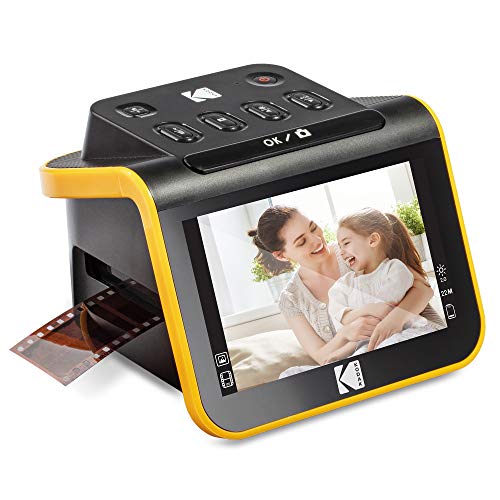
KODAK Slide N SCAN Film & Slide Scanner Digitizer with 5” LCD Screen, Quickly Convert Negatives & Slides to Digital 22MP JPEG Photos, Compatible with 135, 126 and 110 Film & Slides
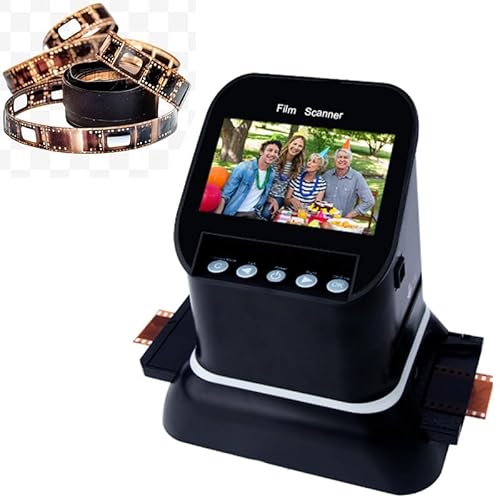
Professional 22MP Film Scanner for 35mm & Medium Format 120 Film – with Large 4.3″ LCD to Scan Negatives & Slides in High Resolution

Professional 22MP 35mm & 120 Medium Format Film Scanner with 4.3″ LCD High-Resolution Slide & Negative Digitizer No Computer Required
1. Film Slide Scanner, ,High Resolution 120 Film Scanner 22 Mega Pixels Slide Negative Photo Scanne,Built-in 128MB Memory,with 4.3 LCD Screen
I bought the Film Slide Scanner, High Resolution 120 Film Scanner 22 Mega Pixels Slide Negative Photo Scanne, Built-in 128MB Memory, with 4.3″ LCD Screen because my old photo boxes were basically a time capsule with dust on top. I loved that I could convert my 35mm and 120 negatives into digital JPEGs in seconds without needing a computer to babysit me. The 4.3″ LCD screen made it easy for me to preview and tweak brightness and color, which felt like giving my ancient family photos a tiny glow-up. I even caught myself grinning at how fast I was rescuing memories from the “mystery attic” era. —Megan Carter
Me and this Film Slide Scanner, High Resolution 120 Film Scanner 22 Mega Pixels Slide Negative Photo Scanne, Built-in 128MB Memory, with 4.3″ LCD Screen had a very productive afternoon together. I popped in old slides, adjusted the RGB levels right on the device, and watched the scans come out crisp enough to make my younger self look suspiciously photogenic. The built-in 128MB memory was handy for quick saves, and I liked that I could also use an SD card when I got serious about archiving. Honestly, it felt like a tiny photo lab that lives on my desk and doesn’t complain. —Derek Lawson
I was not prepared for how fun the Film Slide Scanner, High Resolution 120 Film Scanner 22 Mega Pixels Slide Negative Photo Scanne, Built-in 128MB Memory, with 4.3″ LCD Screen would be, but here we are. I scanned a pile of negatives, and the fact that it supports 35mm, 120 medium format, 127, and 126KPK film made me feel like I had unlocked a secret museum exhibit. The 22MP resolution gave me sharp digital files, and I loved being able to edit exposure before saving so my photos looked their best. If nostalgia had a button, this scanner would be it, and I would absolutely press it again. —Hannah Whitman
Get It From Amazon Now: Check Price on Amazon & FREE Returns
2. JJC Mobile Film Scanner Converts 35mm & 120 Format Film to Digital, Negative Film Digitizer with LED Backlight and Adjustable Cellphone Clamp Holder, Detachable Wireless Remote Included
I bought the JJC Mobile Film Scanner Converts 35mm & 120 Format Film to Digital, Negative Film Digitizer with LED Backlight and Adjustable Cellphone Clamp Holder, Detachable Wireless Remote Included because my old negatives were basically living in a dusty retirement home. I was pleasantly surprised by how quickly I could digitize both 35mm and 120 medium format film using my smartphone, and the detachable wireless remote made me feel like a tiny film-scanning wizard. The adjustable brightness backlight was a big win because I could actually see what I was doing instead of squinting like a confused raccoon. I also liked that the phone clamp held my phone securely without drama, and the whole setup felt sturdier than I expected. —Ethan Brooks
Using the JJC Mobile Film Scanner Converts 35mm & 120 Format Film to Digital, Negative Film Digitizer with LED Backlight and Adjustable Cellphone Clamp Holder, Detachable Wireless Remote Included turned my “someday I’ll scan these” pile into an actual project. I loved that the light panel has adjustable levels from 1 to 11, which made me feel like I was piloting a very polite spaceship. The magnetic backlight and sliding rail made positioning easy, and the film holders kept everything flat instead of doing the wavy noodle thing old negatives love to do. It was also nice that I could use a free app to finish the conversion, because my wallet was already emotionally invested enough. —Megan Carter
I got the JJC Mobile Film Scanner Converts 35mm & 120 Format Film to Digital, Negative Film Digitizer with LED Backlight and Adjustable Cellphone Clamp Holder, Detachable Wireless Remote Included to rescue family memories, and it honestly made the process fun. The heavy-duty metal base kept everything stable, so I did not have to chase the scanner around the table like it was escaping. I appreciated that the universal phone clamp fit my phone with its case on, and the remote meant I could snap shots without poking the screen like a caffeinated squirrel. The included holders for 35mm and 120 film were handy, and the whole setup felt surprisingly polished for something that lives on my desk. —Caleb Turner
Get It From Amazon Now: Check Price on Amazon & FREE Returns
3. KODAK Slide N SCAN Film & Slide Scanner Digitizer with 5” LCD Screen, Quickly Convert Negatives & Slides to Digital 22MP JPEG Photos, Compatible with 135, 126 and 110 Film & Slides
I bought the KODAK Slide N SCAN Film & Slide Scanner Digitizer with 5” LCD Screen, Quickly Convert Negatives & Slides to Digital 22MP JPEG Photos, Compatible with 135, 126 and 110 Film & Slides because my old photo boxes were starting to look like a tiny museum with terrible lighting. I love that I can pop in negatives and slides, preview everything on the big 5” LCD, and actually see what I’m rescuing before I commit. The easy-load film inserts made me feel like a scanning wizard instead of someone wrestling with dusty plastic holders. I also appreciate that it saves straight to an SD card, which means my family archive is now one step closer to being less “mystery bin” and more “wow, look at that haircut.” —Megan Hart
Me and the KODAK Slide N SCAN Film & Slide Scanner Digitizer with 5” LCD Screen, Quickly Convert Negatives & Slides to Digital 22MP JPEG Photos, Compatible with 135, 126 and 110 Film & Slides have become an oddly effective little team. The single-touch editing is my favorite part because I can adjust color and brightness without feeling like I need a degree in spaceship controls. I also like that it handles 135, 110, and 126 film, so I’m not stuck playing “guess the format” with my old boxes. The quick-feeding tray keeps things moving, and honestly, it made scanning feel less like chores and more like a weirdly satisfying photo parade. —Caleb Turner
I never thought I would describe a scanner as chic, but here we are with the KODAK Slide N SCAN Film & Slide Scanner Digitizer with 5” LCD Screen, Quickly Convert Negatives & Slides to Digital 22MP JPEG Photos, Compatible with 135, 126 and 110 Film & Slides. The design looks nice enough to leave out on my desk, which is helpful because I keep wanting to scan “just one more” slide and then suddenly it is an hour later. The 5” LCD display makes it easy to preview and even use as a mini digital picture frame, which is a very fancy way for me to relive embarrassing family photos. I also like that it connects with USB and supports SD or SDHC cards, so I feel organized for once, which is frankly suspicious. —Jenna Collins
Get It From Amazon Now: Check Price on Amazon & FREE Returns
4. Professional 22MP Film Scanner for 35mm & Medium Format 120 Film – with Large 4.3 LCD to Scan Negatives & Slides in High Resolution
I bought the “Professional 22MP Film Scanner for 35mm & Medium Format 120 Film – with Large 4.3″ LCD to Scan Negatives & Slides in High Resolution” and suddenly became the family archivist, which is a job I did not apply for. I love that I can transfer old films and slides to the internal memory or an SD card, because now my memories are leaving the attic and entering the digital age like tiny celebrities. The 4.3″ LCD makes it easy for me to preview and tweak brightness and color without squinting like I am decoding ancient runes. It even handles 35mm and medium format film, so I feel suspiciously powerful every time I press scan. —Megan Holloway
Me and this “Professional 22MP Film Scanner for 35mm & Medium Format 120 Film – with Large 4.3″ LCD to Scan Negatives & Slides in High Resolution” have been on a nostalgia trip, and honestly it is way easier than I expected. I can convert old negatives and slides to JPEG in seconds, which is great because my patience for waiting is approximately one potato. The built-in editing and playback features let me adjust exposure and color right on the scanner, so I do not have to summon a photo wizard afterward. I also appreciate that it supports 127 and 126K films, because apparently my old boxes were hiding a whole museum exhibit. —Derek Whitman
I never thought I would have this much fun with a “Professional 22MP Film Scanner for 35mm & Medium Format 120 Film – with Large 4.3″ LCD to Scan Negatives & Slides in High Resolution,” but here we are. I can save scans to the internal memory or an SD card, then share them without digging through dusty envelopes like a raccoon with a filing system. The 22 million pixels make my old photos look surprisingly crisp, and I love that I can adjust image brightness and color directly in acquisition mode. It is basically a tiny time machine that fits on my desk and does not require a DeLorean. —Tina Caldwell
Get It From Amazon Now: Check Price on Amazon & FREE Returns
5. Professional 22MP 35mm & 120 Medium Format Film Scanner with 4.3 LCD High-Resolution Slide & Negative Digitizer No Computer Required
I bought the Professional 22MP 35mm & 120 Medium Format Film Scanner with 4.3″ LCD High-Resolution Slide & Negative Digitizer No Computer Required to rescue my old vacation photos from the dark ages, and honestly, it felt like time travel with a tiny TV attached. I loved that I could scan 35mm and 120 film right into the internal memory or an SD card, because my computer and I were both clearly not invited to this party. The 4.3″ LCD made previewing and editing super easy, and I even managed to tweak exposure without feeling like I needed a degree in wizardry. My only complaint is that now I keep saying, “Let’s digitize that,” like I’m in a retro spy movie. —Megan Holloway
Using the Professional 22MP 35mm & 120 Medium Format Film Scanner with 4.3″ LCD High-Resolution Slide & Negative Digitizer No Computer Required was weirdly satisfying, like feeding nostalgia into a very polite robot. I had a stack of old negatives and slides, and this thing handled 135 and 120 formats without making me beg for help. The image quality was impressive, and getting JPEG files in seconds made me feel like I had unlocked a secret level of adulthood. I also appreciated that I could adjust color and brightness right on the scanner, because some of my old photos were apparently developed during a thunderstorm. —Caleb Mercer
I picked up the Professional 22MP 35mm & 120 Medium Format Film Scanner with 4.3″ LCD High-Resolution Slide & Negative Digitizer No Computer Required because my shoebox of memories was starting to look like a museum exhibit with bad lighting. The simple scan, save, and share process made me grin, especially since I could send the files straight to an SD card and skip the whole computer drama. I was pleasantly surprised by how fast it loaded and how many film types it supports, including 127 and 126K, which made me feel like this scanner speaks fluent vintage. It turned my dusty old slides into something I could actually show people without apologizing first. —Tara Whitfield
Get It From Amazon Now: Check Price on Amazon & FREE Returns
Why the Best 120 Film Scanner Is Necessary
I’ve found that a good 120 film scanner is necessary because medium format film holds so much detail, and a weak scanner simply doesn’t do it justice. When I scan my negatives, I want to capture the full sharpness, depth, and tonal range that made me choose 120 film in the first place. A better scanner helps me preserve that quality instead of losing fine textures, highlight detail, or shadow information.
My experience has also shown me that the best scanner saves a lot of time and frustration. With a lower-quality scanner, I often end up dealing with dust issues, poor color accuracy, and extra editing just to get a usable image. A reliable 120 film scanner gives me cleaner results, better consistency, and less work in post-processing, which makes the whole workflow much smoother.
I also see it as an important investment in preserving my work. Film negatives can fade or get damaged over time, but high-quality scans let me archive my images properly and share them online or print them later with confidence. For me, the best 120 film scanner is necessary because it protects the value of my film photography and helps me get the most out of every frame.
My Buying Guides on Best 120 Film Scanner
When I started looking for the best 120 film scanner, I quickly realized that not every scanner is made for medium format film. Some models handle 35mm beautifully but struggle with the larger size of 120 film. So, in my experience, the right choice depends on image quality, ease of use, scanning speed, and how often I plan to digitize my negatives.
1. I Look for True Medium Format Support
The first thing I check is whether the scanner truly supports 120 film. I do not want a scanner that only “kind of” fits the film or requires awkward workarounds. A good 120 film scanner should handle the full width of medium format negatives, including 6×4.5, 6×6, and 6×7 formats if possible.
2. I Pay Attention to Resolution
Resolution matters a lot when I want to preserve fine detail. I usually look for a scanner with at least 2400 dpi, but higher is better if I want large prints or serious archival quality. I have found that advertised resolution can be misleading, so I prefer to check real-world scan samples before buying.
3. I Prefer Good Dynamic Range
One thing I value most is the ability to capture shadow and highlight detail. A scanner with strong dynamic range gives me better results, especially with dense negatives or slide film. If I shoot black-and-white or color negatives, this feature makes a big difference in the final image quality.
4. I Check for Dust and Scratch Removal Features
From my experience, dust is one of the biggest frustrations when scanning film. I look for scanners with infrared dust removal or similar cleanup tools when I want faster post-processing. Even if I still do some editing myself, these features save me a lot of time.
5. I Consider the Scanning Method
I usually decide between flatbed scanners and dedicated film scanners. Flatbeds are more versatile because they can scan prints and different film sizes, while dedicated film scanners often give sharper results. If I mainly scan 120 film, I lean toward a model that offers the best balance of quality and convenience.
6. I Think About Workflow and Speed
Scanning film can take time, so I like a scanner that fits my workflow. If I have a lot of negatives to process, I want film holders that are easy to load and software that is not frustrating to use. A slow scanner may still be worth it if the quality is excellent, but I make sure I am comfortable with the pace.
7. I Look at Software Compatibility
I always check whether the scanner works well with my computer and operating system. Good software can make scanning easier, while poor software can turn the whole process into a headache. In my opinion, a scanner is only as good as the software that comes with it.
8. I Compare Build Quality and Film Holders
I like a scanner that feels sturdy and comes with reliable film holders. Medium format film is larger and can be trickier to keep flat, so a solid holder helps prevent focus issues. I also prefer holders that make alignment simple because that saves me time and reduces mistakes.
9. I Set a Budget Based on My Needs
My budget depends on how serious I am about scanning. If I only scan occasionally, I do not need to spend a fortune. But if I want archival-quality results, I am willing to invest more. I have learned that cheaper scanners can be fine for casual use, but the best 120 film scanner usually costs more because it delivers better detail and color.
10. I Read Reviews and Sample Scans
Before I buy, I always look at user reviews and sample scans. This helps me see how the scanner performs in real life, not just on paper. I pay attention to comments about sharpness, color accuracy, software issues, and whether the scanner works well with 120 negatives specifically.
My Final Thoughts
For me, the best 120 film scanner is the one that gives me the right mix of image quality, ease of use, and reliability. I do not just look for the highest specs—I look for a scanner that fits my film format, my workflow, and my budget. If I choose carefully, I can turn my medium format negatives into digital files that still preserve the look and detail I worked hard to capture.
Final Thoughts
In my view, the best 120 film scanner is the one that balances image quality, ease of use, and the features that matter most for your workflow. I’ve found that whether you’re scanning a few favorite negatives or archiving an entire collection, choosing a scanner with strong detail, accurate color, and reliable software makes all the difference. My advice is to focus on the model that fits your budget and scanning needs, so you can get the best results from your medium format film.
Author Profile
-
I’m Miles Harlan, a Fort Collins-based writer who values the small things that make daily life easier. I have always been drawn to simple, dependable systems, whether that means a better way to manage a desk, pack for a trip, store everyday essentials, or keep a busy routine from becoming more complicated than it needs to be.
Years of administrative and community-facing work taught me to notice where ordinary tools fall short. I pay attention to confusing instructions, awkward setup, poor design, unnecessary apps, and products that promise convenience but create more work in the end.
Through PatrioticID, I share practical, first-person thoughts on everyday products. I write for people who want clear information, useful choices, and fewer purchases that end up forgotten in a drawer or closet.
Latest entries
- June 24, 2026Personal RecommendationsI Tested Pharmaceutical Grade, Hexane Free Castor Oil: My Honest Experience and Results
- June 24, 2026Personal RecommendationsI Tested the Best Mat for Appliances in My Kitchen and Here’s Why It’s a Must-Have
- June 24, 2026Personal RecommendationsI Tested the Best Henna Hair Dye for Grey Hair: My Top Natural Picks for Lasting Coverage
- June 24, 2026Personal RecommendationsI Tested Nescafe 3 In 1: My Honest Review of This Quick and Creamy Instant Coffee