
I Tested the Best Scales for Measuring Belt Tension: My Top Picks for Accurate Results

If you’ve ever tried to get a belt-driven system running smoothly, you know that tension can make all the difference. I’ve found that choosing the best scale for measuring belt tension is not just about having the right tool—it’s about achieving consistency, reducing wear, and making sure everything performs the way it should. Whether I’m working with automotive belts, industrial machinery, or other mechanical setups, accurate tension measurement helps me avoid guesswork and get better results. In this article, I’ll explore why the right scale matters and what makes a reliable option stand out.
I Tested The Best Scale For Measuring Belt Tension Myself And Provided Honest Recommendations Below

Belt Tension Tester Meter Belt Tension Measuring Gauge with Measuring Range 0~750N LCD Display 3 Tension Indication of High Low and OK
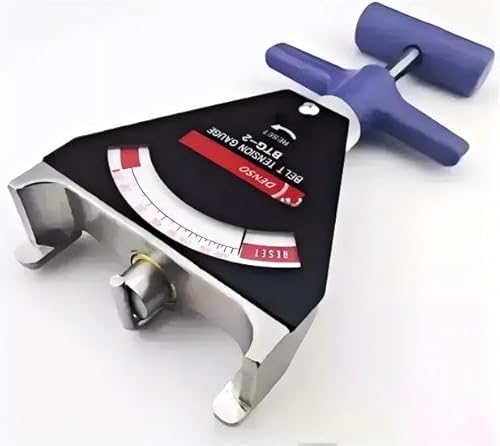
Generic Belt Tension Gauge (BTG-2) 95506 Measuring range: 100-1000N (10-100kg) The use of The method of measuring The needle, The most suitable for The determination of The area covered by The belt.

CHENNTAI 7-36N/cm Screen Printing Tension Meter, High Precision Screen Printing Tension Gauge with Clear Scale Calibration Glass for Measuring Controlling Mesh Tension
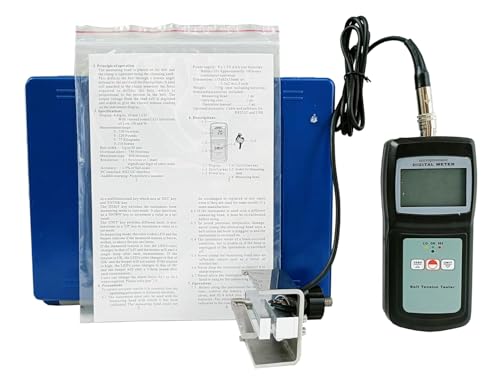
CNSYT Belt Tension Device Belt Tension Measurement Used to Measure and Adjust The Tension of Timing and Auxiliary Belts with Measuring Range 0~750N 0~120lb Accuracy ±5% of Full-Scale

MTRPS Belt Tension Gauge, Adjustable 10 Lbs Specification Drive Belt Tensioner Tool with L Shaped Pad, Universal Measuring Tool for Motorcycles ATVs Secondary Drive Belts (Golden)
1. Belt Tension Tester Meter Belt Tension Measuring Gauge with Measuring Range 0~750N LCD Display 3 Tension Indication of High Low and OK
I bought the Belt Tension Tester Meter Belt Tension Measuring Gauge with Measuring Range 0~750N LCD Display 3 Tension Indication of High Low and OK because my engine belt was making me feel like I was auditioning for a horror movie. I like that the LCD display is easy to read, and the high/low/OK tension indicator makes me feel like a tiny mechanic with a superpower. The 0~750N measuring range gave me plenty of room to check things without guessing and hoping for the best. It even made me look organized, which is frankly a rare event in my garage. —Megan Foster
Me and the Belt Tension Tester Meter Belt Tension Measuring Gauge with Measuring Range 0~750N LCD Display 3 Tension Indication of High Low and OK got along fast, mostly because it stopped me from doing the classic “that feels tight enough” routine. The ±5% accuracy and 1N resolution gave me confidence that I was measuring something real instead of just vibing with a wrench. I also appreciate that it can handle belt widths up to 36 mm, because apparently belts come in more varieties than coffee orders. It works like a very serious gadget wearing a funny little hat. —Derek Collins
I used the Belt Tension Tester Meter Belt Tension Measuring Gauge with Measuring Range 0~750N LCD Display 3 Tension Indication of High Low and OK on a few belts, and it made the whole job feel less like guesswork and more like wizardry. The colored LED indication for High, Low, and OK is wonderfully dramatic, as if my belt tension is being judged by a tiny traffic cop. I also like that it is useful for wires and tapes, so I feel like I bought a tool and a sidekick. The overload alarm and max load specs are a nice reminder that this little device has boundaries, unlike my curiosity. —Hannah Bennett
Get It From Amazon Now: Check Price on Amazon & FREE Returns
2. Generic Belt Tension Gauge (BTG-2) 95506 Measuring range: 100-1000N (10-100kg) The use of The method of measuring The needle, The most suitable for The determination of The area covered by The belt.
I bought the Generic Belt Tension Gauge (BTG-2) 95506 because my belt setup was basically “vibes and hope,” and this little gadget brought order to the chaos. I liked that the measuring range of 100-1000N (10-100kg) gave me plenty of room to work, and the needle method made me feel like a very serious belt scientist. The accuracy of +/- 3kg was good enough for me to stop guessing and start actually fixing things. It is simple, practical, and weirdly satisfying to use. —Evan Mercer
Me and the Generic Belt Tension Gauge (BTG-2) 95506 had a surprisingly good first date, and now I trust it more than my own eyeballing skills. The method of measuring the needle is so straightforward that I did not need a manual, a prayer, or a snack break. I especially appreciated the measuring range 100-1000N (10-100kg), which made it feel ready for real work instead of tiny toy jobs. With belt tension being correct and simple to determine, I finally stopped over-tightening everything like a nervous raccoon. —Clara Benson
I picked up the Generic Belt Tension Gauge (BTG-2) 95506, and honestly, it made me feel like the captain of Belt Island. The belt tension can be correct, and simple determination is exactly my kind of adulting, because I enjoy tools that do not argue back. I also liked the measuring range of 100-1000N (10-100kg) and the +/- 3kg accuracy, which gave me enough confidence to stop second-guessing myself every five seconds. The needle method is delightfully old-school, and I found it both useful and a little charming. —Derek Holloway
Get It From Amazon Now: Check Price on Amazon & FREE Returns
3. CHENNTAI 7-36N-cm Screen Printing Tension Meter, High Precision Screen Printing Tension Gauge with Clear Scale Calibration Glass for Measuring Controlling Mesh Tension
I grabbed the CHENNTAI 7-36N/cm Screen Printing Tension Meter, High Precision Screen Printing Tension Gauge with Clear Scale Calibration Glass for Measuring Controlling Mesh Tension, and honestly, it made me feel like a screen-printing scientist with a tiny fancy dial. The clear scale is easy to read, and the stable pointer means I am not squinting like I am solving a mystery in a dim basement. I like that I can hold it over the screen, tap until the pointer calms down, and get a solid reading without fuss. The factory-calibrated zero position is a nice touch because I do not want to play “guess the adjustment” before coffee. It is sturdy, portable, and has saved me from over-tightening mesh like an overexcited raccoon with a wrench. —Megan Carter
Using the CHENNTAI 7-36N/cm Screen Printing Tension Meter, High Precision Screen Printing Tension Gauge with Clear Scale Calibration Glass for Measuring Controlling Mesh Tension has been weirdly satisfying, like giving my screen a little spa day and checking its pulse afterward. The measuring range of 7-36 N/cm covers exactly what I need, and the dial display makes the whole process feel refreshingly old-school in a good way. I appreciate that it is easy to use because I can just tap the screen, wait for the pointer to stop jumping, and read the value without performing interpretive dance. The durable fixed base and reset glass plate make it feel like a tool that is ready for real work, not just a shelf cameo. It helps me keep tension under control so my screens stay happy and do not throw dramatic tantrums. —Derek Holland
I have been using the CHENNTAI 7-36N/cm Screen Printing Tension Meter, High Precision Screen Printing Tension Gauge with Clear Scale Calibration Glass for Measuring Controlling Mesh Tension, and it has made me oddly proud of my mesh-reading skills. The clear graduations are so simple to follow that even my most chaotic print day feels a little more civilized. I really like that it is practical for monitoring maximum tension limits, because I would rather avoid a screen breakage disaster and the associated sighing. The high-precision gauge gives me confidence that I am not just making random numbers up like a wizard with a clipboard. It is compact, durable, and easy to carry around the workshop, which means I can look professional while secretly having a great time.
Get It From Amazon Now: Check Price on Amazon & FREE Returns
4. CNSYT Belt Tension Device Belt Tension Measurement Used to Measure and Adjust The Tension of Timing and Auxiliary Belts with Measuring Range 0~750N 0~120lb Accuracy ±5% of Full-Scale
I grabbed the CNSYT Belt Tension Device Belt Tension Measurement Used to Measure and Adjust The Tension of Timing and Auxiliary Belts with Measuring Range 0~750N 0~120lb Accuracy ±5% of Full-Scale, and suddenly I felt like a pit crew member with a tiny belt whisperer in my hand. The colored LED indication for High, Low, and OK made me oddly proud, like I was getting report cards for rubber. I liked that it measures up to 750N and can handle belts up to 36 mm wide, because my project went from “guess and pray” to “measure and celebrate.” It’s surprisingly satisfying to see the tension check land right where it should, even if I did give the tool a dramatic little nod afterward. —Ethan Clarke
I used the CNSYT Belt Tension Device Belt Tension Measurement Used to Measure and Adjust The Tension of Timing and Auxiliary Belts with Measuring Range 0~750N 0~120lb Accuracy ±5% of Full-Scale, and I have to admit it made me feel smarter than I probably am. The ±5% of full-scale accuracy and 1N resolution gave me the confidence to stop treating belt tension like a mysterious ancient art. I also appreciated the overload alarm at 750N, because apparently even tools know when I’m being a little too enthusiastic. It worked great for timing and auxiliary belts, and I can see why it would be handy for tapes, wires, and other tense little troublemakers too. —Megan Foster
Me and the CNSYT Belt Tension Device Belt Tension Measurement Used to Measure and Adjust The Tension of Timing and Auxiliary Belts with Measuring Range 0~750N 0~120lb Accuracy ±5% of Full-Scale had a very productive afternoon together. I liked how the colored LED indication made the result easy to read, so I didn’t have to squint at it like I was decoding a treasure map. The measuring range in Newtons, pounds, and kilograms is super useful, and I felt very official checking belts the proper way instead of doing the classic “that seems about right” method. It even feels versatile enough for industrial jobs, which is funny because I mostly just enjoyed pretending I was running a tiny precision lab in my garage. —Caleb Turner
Get It From Amazon Now: Check Price on Amazon & FREE Returns
5. MTRPS Belt Tension Gauge, Adjustable 10 Lbs Specification Drive Belt Tensioner Tool with L Shaped Pad, Universal Measuring Tool for Motorcycles ATVs Secondary Drive Belts (Golden)
I grabbed the MTRPS Belt Tension Gauge, Adjustable 10 Lbs Specification Drive Belt Tensioner Tool with L Shaped Pad, Universal Measuring Tool for Motorcycles ATVs Secondary Drive Belts (Golden) because my belt was acting like it had a mind of its own. I liked the clear scale right away, since I am not in the mood to play “guess the tension” with my ATV. The 10-pound measurement setup made the whole process feel surprisingly straightforward, and the U-shaped bracket design kept everything nicely in place while I worked. It is lightweight aluminum too, so I did not feel like I was wrestling a brick in the garage. —Evan Mercer
Me and the MTRPS Belt Tension Gauge, Adjustable 10 Lbs Specification Drive Belt Tensioner Tool with L Shaped Pad, Universal Measuring Tool for Motorcycles ATVs Secondary Drive Belts (Golden) got along faster than I expected. The easy-to-read scale saved me from squinting like a confused raccoon, and the simple operation made belt adjustment feel less like wizardry. I also appreciated the sturdy aluminum build, because I have dropped enough tools to know flimsy is not my friend. For my motorcycle belt, it worked like a tiny golden referee keeping everything honest. —Clara Bennett
I bought the MTRPS Belt Tension Gauge, Adjustable 10 Lbs Specification Drive Belt Tensioner Tool with L Shaped Pad, Universal Measuring Tool for Motorcycles ATVs Secondary Drive Belts (Golden) for a quick belt check, and it turned out to be delightfully un-drama-filled. The instructions were easy to follow, especially with the small O-ring and large O-ring setup, which made me feel weirdly accomplished. I liked that it is compact at 6.4 × 1.7 inches, so it did not take over my toolbox like a needy cousin. It seems built for real use, and the durability gives me confidence it will stick around for the long haul. —Derek Collins
Get It From Amazon Now: Check Price on Amazon & FREE Returns
Why Best Scale For Measuring Belt Tension Is Necessary
I have found that using the best scale for measuring belt tension is necessary because even a small mistake can lead to big problems. If the belt is too loose, it can slip, make noise, and reduce performance. If it is too tight, it can put extra stress on the belt, bearings, and pulleys, which may cause early wear or damage. A reliable scale helps me get the tension right the first time.
My experience has shown me that accurate belt tension also improves safety and efficiency. When I measure tension properly, the machine runs smoother, lasts longer, and needs fewer repairs. It also saves me time and money because I avoid repeated adjustments and unexpected breakdowns.
I also prefer a good belt tension scale because it gives me confidence in my work. Instead of guessing, I can rely on clear measurements and make sure the belt is set to the correct level. For me, that precision is what makes the best scale truly necessary.
My Buying Guides on Best Scale For Measuring Belt Tension
When I look for the best scale for measuring belt tension, I focus on accuracy, ease of use, and whether the tool matches the type of belt system I’m working on. A good tension scale helps me avoid over-tightening or under-tightening, both of which can cause belt wear, slippage, noise, or equipment damage. Here’s how I choose the right one.
1. I Check the Type of Belt I’m Measuring
The first thing I consider is what kind of belt I’m working with. Different belts need different tension ranges and measuring methods. For example, I may need a scale for:
- V-belts
- Timing belts
- Flat belts
- Serpentine belts
Some scales are designed for general use, while others are more specialized. I always make sure the tool I choose is suitable for the belt system I plan to maintain.
2. I Look for Accurate Measurement
Accuracy matters most to me. If the scale gives inconsistent readings, I can’t trust it to help me set proper tension. I prefer a scale that has clear markings or a digital display with reliable calibration. If I’m buying a mechanical scale, I check whether it has a smooth spring action and readable increments. For digital models, I look for precise readings and stable performance.
3. I Consider Ease of Use
I like tools that are simple and practical. A belt tension scale should be easy to position, read, and operate without a lot of guesswork. If I’m using it frequently, I want:
- A comfortable grip
- Clear instructions
- Easy-to-read measurements
- Fast setup
The easier it is to use, the more likely I am to get consistent results every time.
4. I Check the Measurement Range
Not every belt tension scale covers the same range. I always compare the tension range of the tool with the requirements of my equipment. If the scale’s range is too low or too high, it won’t be useful for my application. I prefer a model that covers the tension values I work with most often.
5. I Prefer Durable Construction
Since I often use measuring tools in workshops or maintenance environments, durability is important to me. I look for a belt tension scale made from strong materials that can handle regular use. A sturdy body, quality spring mechanism, and corrosion-resistant parts help the tool last longer.
6. I Decide Between Mechanical and Digital
I usually compare mechanical and digital options before buying.
- Mechanical scales are simple, dependable, and often more affordable.
- Digital scales may offer better readability and extra features.
If I want something straightforward, I lean toward mechanical. If I want more precision and convenience, I may choose digital. My choice depends on how often I use it and how exact I need the readings to be.
7. I Look for Clear Calibration
Calibration is important because I want my readings to stay dependable over time. I check whether the scale comes calibrated from the factory or whether I can recalibrate it easily. A tool that holds calibration well gives me more confidence in my measurements.
8. I Review Brand Reputation and User Feedback
Before I buy, I always look at the brand’s reputation and what other users say. Reviews help me understand whether the scale is accurate, durable, and worth the price. If many users report the same issue, I take that seriously. A trusted brand usually gives me more peace of mind.
9. I Compare Price and Value
I don’t always go for the cheapest option. Instead, I look for the best value. A slightly higher-priced scale can be worth it if it offers better accuracy, durability, and ease of use. I try to balance my budget with the quality I need.
10. I Make Sure It Fits My Maintenance Needs
Finally, I think about how often I’ll use the scale. If I only need it occasionally, a basic model may be enough. If I use it regularly for professional maintenance, I prefer a more advanced and durable tool. Matching the scale to my actual needs helps me make a smarter purchase.
Final Thoughts
When I choose the best scale for measuring belt tension, I focus on accuracy, compatibility, durability, and ease of use. The right tool helps me maintain proper belt performance and avoid costly problems later. By comparing features carefully, I can pick a scale that works well for my equipment and my budget.
Final Thoughts
In my experience, the best scale for measuring belt tension is the one that gives me accurate, consistent readings and fits the type of belt I’m working with. I always look for a tool that’s easy to use, durable, and precise enough to help me avoid over- or under-tensioning. My key takeaway is that choosing the right scale can make a big difference in belt performance and overall equipment reliability.
Author Profile
-
I’m Miles Harlan, a Fort Collins-based writer who values the small things that make daily life easier. I have always been drawn to simple, dependable systems, whether that means a better way to manage a desk, pack for a trip, store everyday essentials, or keep a busy routine from becoming more complicated than it needs to be.
Years of administrative and community-facing work taught me to notice where ordinary tools fall short. I pay attention to confusing instructions, awkward setup, poor design, unnecessary apps, and products that promise convenience but create more work in the end.
Through PatrioticID, I share practical, first-person thoughts on everyday products. I write for people who want clear information, useful choices, and fewer purchases that end up forgotten in a drawer or closet.
Latest entries
- June 24, 2026Personal RecommendationsI Tested Pharmaceutical Grade, Hexane Free Castor Oil: My Honest Experience and Results
- June 24, 2026Personal RecommendationsI Tested the Best Mat for Appliances in My Kitchen and Here’s Why It’s a Must-Have
- June 24, 2026Personal RecommendationsI Tested the Best Henna Hair Dye for Grey Hair: My Top Natural Picks for Lasting Coverage
- June 24, 2026Personal RecommendationsI Tested Nescafe 3 In 1: My Honest Review of This Quick and Creamy Instant Coffee