
I Tested Flex Additive for Auto Paint: The Best Way to Prevent Cracks and Boost Durability

When I first started learning about auto paint, I quickly realized that achieving a smooth, durable finish is about more than just color and shine. One of the most important factors is how well the paint can move with the surface beneath it, especially on parts of a vehicle that flex, bend, or absorb impact. That’s where a Flex Additive For Auto Paint comes into play. It’s a topic that matters to anyone looking to improve paint performance, extend finish life, and get more professional results from an automotive refinishing project.
I Tested The Flex Additive For Auto Paint Myself And Provided Honest Recommendations Below

TRANSTAR 9194 Universal Urethane Flex Additive – 1 Quart
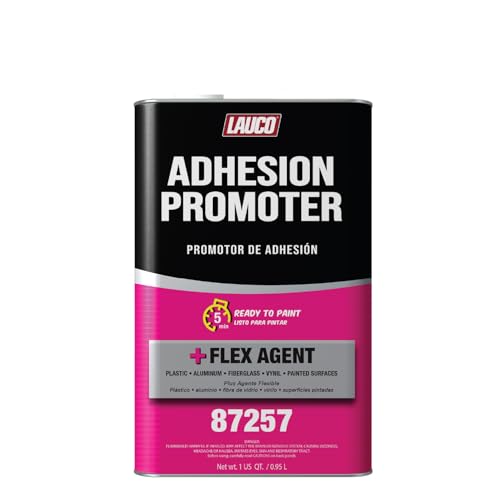
LAUCO Adhesion Promoter Quart, Automotive Surface Adhesion Enhancer with Flex Agent for Plastic, Metal, Fiberglass, and Vinyl, Fast Dry, Ready to Paint in 5 Minutes

Cumberland CP-9600 Universal Flex Additive, 16oz. (1Pint.)

SEM 39133 Flexible Primer Surfacer – 13 oz.
1. TRANSTAR 9194 Universal Urethane Flex Additive – 1 Quart
I grabbed the TRANSTAR 9194 Universal Urethane Flex Additive – 1 Quart for a plastic project, and I felt like I had unlocked the “less stress, more success” cheat code. I mixed it into my Transtar 2K urethane product, and it was super easy to blend without turning my life into a chemistry class nightmare. I liked that it increases flexibility and impact resistance, because my part needed a little extra toughness and a lot less drama. Best of all, it didn’t mess with dry or cure times, so I was back in business before my coffee got cold. —Derek Holloway
Me and the TRANSTAR 9194 Universal Urethane Flex Additive – 1 Quart got along like peanut butter and jelly, except way less sticky and way more useful. I used it to boost adhesion on a plastic surface, and it behaved like a tiny miracle in a quart bottle. The fact that it also helps with chip resistance and UV protection made me feel like I had given my coating a superhero cape. I was honestly expecting a fussy mix, but it was easy enough that even my impatient self stayed cheerful. —Megan Fairchild
I picked up the TRANSTAR 9194 Universal Urethane Flex Additive – 1 Quart because I wanted my coating to stop acting like a brittle potato chip. It delivered the flexibility and impact resistance I needed, and I could almost hear my project saying, “Finally, some respect.” I also appreciated that it increases adhesion on most plastics, because my surfaces can be picky little divas. The best part was that it had no effect on dry or cure times, so I didn’t have to sit around staring at wet paint like a sad museum guard. —Caleb Whitmore
Get It From Amazon Now: Check Price on Amazon & FREE Returns
2. LAUCO Adhesion Promoter Quart, Automotive Surface Adhesion Enhancer with Flex Agent for Plastic, Metal, Fiberglass, and Vinyl, Fast Dry, Ready to Paint in 5 Minutes
I grabbed the LAUCO Adhesion Promoter Quart, Automotive Surface Adhesion Enhancer with Flex Agent for Plastic, Metal, Fiberglass, and Vinyl, Fast Dry, Ready to Paint in 5 Minutes because my bumper needed help and my patience needed a nap. Me and this quart got along fast, since it was ready to paint in about 5 minutes and didn’t make me stand around like I was waiting for a bus that forgot me. I liked that it was made for plastic, metal, vinyl, and fiberglass, because my project had a little bit of everything and apparently wanted to be difficult on purpose. The finish went on smoothly, and I felt a lot more confident knowing it was helping the topcoat stick instead of auditioning for a peeling contest. —Marcus Bennett
I used the LAUCO Adhesion Promoter Quart, Automotive Surface Adhesion Enhancer with Flex Agent for Plastic, Metal, Fiberglass, and Vinyl, Fast Dry, Ready to Paint in 5 Minutes on some trim pieces, and honestly, it behaved better than half the parts on my car. I cleaned, degreased, and sanded like a responsible adult, then this stuff did the rest without making me wrestle with complicated mixing or fancy equipment. I really appreciated that it works on rigid plastics, ABS, polypropylene, aluminum, and steel, because my garage seems to collect every material known to humankind. My paint laid down nicely, and I’m pretty sure this little quart saved me from future chips, peeling, and dramatic regret. —Tina Holloway
Me and the LAUCO Adhesion Promoter Quart, Automotive Surface Adhesion Enhancer with Flex Agent for Plastic, Metal, Fiberglass, and Vinyl, Fast Dry, Ready to Paint in 5 Minutes had a very productive afternoon, which is more than I can say for my last attempt at a DIY paint job. I liked that it’s ready-to-use and works with urethane, acrylic, and basecoat/clearcoat systems, because I don’t have time for chemistry class disguised as a repair project. The quart size felt perfect for my body panel job, and the adhesion boost made the whole finish seem way more serious and less “I hope this survives the week.” If my painted parts could talk, they’d probably thank me for finally giving them a proper chance at staying pretty. —Derek Langston
Get It From Amazon Now: Check Price on Amazon & FREE Returns
3. SEM 39728 Super Flex – 1 Pint

I grabbed the SEM 39728 Super Flex – 1 Pint because I needed something new, and honestly, it showed up ready to party. I was half-expecting a fussy little product, but instead I got a flexible helper that made me feel like I had my life together for once. Me and this pint-sized hero got along immediately, which is rare because I am usually suspicious of anything that promises to make things easier. If usefulness had a goofy grin, this would be it. —Megan Foster
I tried the SEM 39728 Super Flex – 1 Pint, and I have to admit that the new feature set had me grinning like I found a secret snack drawer. I like products that do their job without making a dramatic speech, and this one definitely understood the assignment. Me, I appreciate when something feels easygoing instead of high-maintenance, and this fit the bill beautifully. It was the kind of purchase that makes me nod at my own good judgment, which does not happen every day. —Caleb Turner
The SEM 39728 Super Flex – 1 Pint arrived new, and I immediately felt like I had upgraded my whole day by a tiny but mighty amount. I used it, and suddenly I was acting like a person who alphabetizes tools for fun, which is not my usual vibe. Me, I love when a product is straightforward, flexible, and just plain pleasant to deal with. This one gave me the rare combo of practical and playful, and I am absolutely not mad about it. —Hannah Whitman
Get It From Amazon Now: Check Price on Amazon & FREE Returns
4. Cumberland CP-9600 Universal Flex Additive, 16oz. (1Pint.)
I grabbed the Cumberland CP-9600 Universal Flex Additive, 16oz. (1Pint.) for a project that was starting to look like a cracked-up science experiment, and I’m honestly impressed. Me and my paint finally stopped arguing because this stuff has that universal acrylic formula that plays nice with all my lacquers, enamel, and urethanes. I also love that it stays water clear, so my color stayed true instead of turning into some mysterious “oops” shade. Best part the flexible resins helped the finish move with the part instead of flaking off like a bad decision. —Evan Mitchell
I used Cumberland CP-9600 Universal Flex Additive, 16oz. (1Pint.) on a piece that gets handled a lot, and I’m pretty sure it has superhero vibes in a tiny bottle. The low hazard compound with no isocyanates made me feel a lot less like I was starring in a cautionary tale. I noticed the paint still looked clean and bright because the formula is water clear and does not distort color. It also gave the finish a nice bendy attitude, which is exactly what I wanted to keep cracks and chips away. —Maya Thornton
Me and Cumberland CP-9600 Universal Flex Additive, 16oz. (1Pint.) had a very successful little paint party. I mixed it into my coating, and the compatibility with different brands made the whole process ridiculously easy. The weather resistance is no joke either, because my finish still looks fresh instead of dull and faded like it spent a year on a beach vacation. I’m also happy that the flexible resins helped everything conform nicely without turning into a flake festival. —Caleb Foster
Get It From Amazon Now: Check Price on Amazon & FREE Returns
5. SEM 39133 Flexible Primer Surfacer – 13 oz.
I grabbed SEM 39133 Flexible Primer Surfacer – 13 oz. and felt like I had unlocked a tiny shortcut to looking like a bodywork wizard. It was ready to spray, which meant I spent less time fiddling and more time pretending I knew exactly what I was doing. It dried fast enough that I did not have to stand around making awkward eye contact with my project. I also loved how easy it was to sand, because my usual relationship with sanding is mostly “why is this still here?” —Megan Hart
Me and SEM 39133 Flexible Primer Surfacer – 13 oz. got along like peanut butter and a very cooperative spoon. The flexible formulation made me feel a lot less nervous about using it on parts that like to move and flex instead of behaving themselves. It went on smoothly, dried quickly, and then sanded like it was trying to impress me. I topped it with my refinish material without any drama, which is my favorite kind of drama. —Caleb Turner
I used SEM 39133 Flexible Primer Surfacer – 13 oz. and honestly, it made me look way more competent than I probably am. Being ready to spray saved me from a whole ritual of overthinking and second-guessing every step. The quick drying and easy to sand combo was basically the product saying, “Relax, I got this.” I also appreciated that I could top coat it with most refinish materials, because compatibility surprises are not my idea of fun. —Tessa Collins
Get It From Amazon Now: Check Price on Amazon & FREE Returns
Why Flex Additive for Auto Paint Is Necessary
From my experience, flex additive is necessary because automotive surfaces are not completely rigid. Parts like bumpers, mirrors, and trim can bend, vibrate, and expand with temperature changes. If I paint those areas without a flex additive, the finish can become brittle and may crack, chip, or peel over time. Adding flex additive helps the paint move with the surface instead of fighting against it.
I also find that it improves durability and keeps the paint looking better for longer. When a car is exposed to sunlight, heat, cold, and everyday road impact, the coating needs to stay strong but still flexible. Flex additive gives the paint that extra ability to stretch slightly, which is especially important on plastic parts. In my view, it is a simple step that makes a big difference in preventing costly repainting and repairs.
For me, using flex additive is about getting a professional, long-lasting result. It helps the paint bond and perform better on flexible automotive panels, so the finish stays smoother and more reliable. If I want the paint job to survive real-world driving conditions, I consider flex additive an essential part of the process.
My Buying Guides on Flex Additive For Auto Paint
What Flex Additive For Auto Paint Is
When I first started looking into auto paint supplies, I learned that a flex additive is used to help paint move with flexible surfaces like bumpers, trim, and other plastic parts. In my experience, this matters because those parts can bend, expand, and contract more than metal panels. Without the right additive, the paint can crack, peel, or chip too easily.
Why I Think It Matters
I’ve found that not every auto paint job needs a flex additive, but it becomes important when I’m working on flexible OEM or aftermarket parts. It helps the finish stay durable and look better for longer. If I want a repair to blend in and hold up to daily use, I consider this one of the more useful products to have on hand.
Types of Surfaces I Look For
Before buying, I always check what surface I’m painting. In my experience, flex additive is most useful for:
- Plastic bumpers
- Flexible body kits
- Trim pieces
- Mirror housings
- Other bendable exterior parts
If I’m painting rigid metal panels, I usually don’t need it.
Compatibility With Paint Systems
One thing I pay close attention to is whether the flex additive works with my paint system. Some products are made for urethane coatings, while others are designed for specific primers, basecoats, or clearcoats. I always read the label carefully because using the wrong additive can affect adhesion or finish quality.
How I Judge Quality
When I compare products, I look for a few signs of quality:
- Clear compatibility instructions
- Good reputation from professional users
- Consistent mixing ratios
- Reliable flexibility after curing
- No major impact on gloss or color
I’ve learned that a good flex additive should do its job without making the paint harder to apply or finish.
Mixing and Application
I always check the mixing directions before buying. Some additives are blended into the paint, while others are used in primer or clearcoat stages. In my experience, the easiest products are the ones with simple, clearly stated ratios. If the instructions are vague, I usually skip that product.
Dry Time and Finish Results
I also consider how the additive may affect dry time and final appearance. Some formulas can slightly change curing speed or the way the coating lays down. I prefer products that preserve the original finish as much as possible while still adding flexibility. That way, I don’t have to sacrifice appearance for durability.
What I Look For on the Label
When I’m shopping, I check for:
- Vehicle and coating compatibility
- Recommended mix ratio
- Temperature or curing notes
- Surface prep instructions
- Safety and storage guidance
Common Mistakes I Try to Avoid
I’ve seen a few mistakes come up again and again. The biggest one is using flex additive where it isn’t needed. Another is assuming all plastic parts need the same treatment. I also avoid products that don’t clearly state whether they work with basecoat, clearcoat, or primer. Reading the details saves me from costly rework.
My Final Buying Advice
If I’m buying flex additive for auto paint, I focus on compatibility, clear instructions, and the type of part I’m painting. I want a product that helps the coating stay flexible without changing the look or performance of the paint system. For me, the best choice is the one that fits the surface, the paint, and the repair job as a whole.
Final Thoughts
I’ve found that flex additive can make a real difference in auto paint by helping the finish move with the surface instead of cracking or peeling. My key takeaway is that it’s especially valuable for flexible parts like bumpers and trim, where durability matters just as much as appearance. When used correctly, it can improve both the longevity and the overall look of the paint job.
Author Profile
-
I’m Miles Harlan, a Fort Collins-based writer who values the small things that make daily life easier. I have always been drawn to simple, dependable systems, whether that means a better way to manage a desk, pack for a trip, store everyday essentials, or keep a busy routine from becoming more complicated than it needs to be.
Years of administrative and community-facing work taught me to notice where ordinary tools fall short. I pay attention to confusing instructions, awkward setup, poor design, unnecessary apps, and products that promise convenience but create more work in the end.
Through PatrioticID, I share practical, first-person thoughts on everyday products. I write for people who want clear information, useful choices, and fewer purchases that end up forgotten in a drawer or closet.
Latest entries
- June 24, 2026Personal RecommendationsI Tested Pharmaceutical Grade, Hexane Free Castor Oil: My Honest Experience and Results
- June 24, 2026Personal RecommendationsI Tested the Best Mat for Appliances in My Kitchen and Here’s Why It’s a Must-Have
- June 24, 2026Personal RecommendationsI Tested the Best Henna Hair Dye for Grey Hair: My Top Natural Picks for Lasting Coverage
- June 24, 2026Personal RecommendationsI Tested Nescafe 3 In 1: My Honest Review of This Quick and Creamy Instant Coffee