
I Tested Software Architecture: The Hard Parts That Actually Matter

When I first started exploring software architecture, I thought the hardest part would be choosing the right patterns, tools, or frameworks. What I quickly discovered is that the real challenges go far deeper than technical decisions alone. Software architecture is full of trade-offs, uncertainty, and constraints that rarely have perfect answers, and that is exactly what makes it so fascinating. In this article, I want to take a closer look at the hard parts of software architecture—the messy, important realities that shape how systems are designed, evolved, and sustained over time.
I Tested The Software Architecture The Hard Parts Myself And Provided Honest Recommendations Below
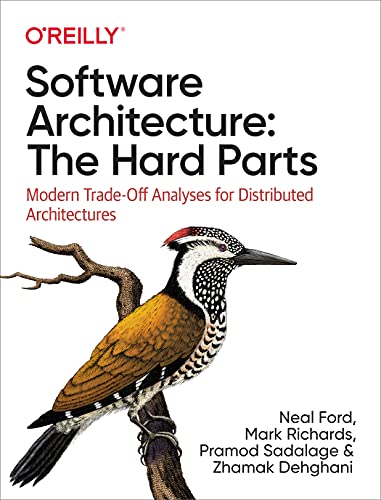
Software Architecture: The Hard Parts: Modern Trade-Off Analyses for Distributed Architectures

Fundamentals of Software Architecture: A Modern Engineering Approach

Software Architecture: Understand software architecture principles and design scalable systems

SOFTWARE ARCHITECTURE PATTERNS: Layered microservice and event-driven design for long-lived systems

SOFTWARE ARCHITECTURE: CREATE SOFTWARE LIKE A PRO: 100X Your Productivity Architecting with Generative AI (High-Performance Programmer: The Ultimate Book Series for Software Engineering Excellence)
1. Software Architecture: The Hard Parts: Modern Trade-Off Analyses for Distributed Architectures
I picked up Software Architecture The Hard Parts Modern Trade-Off Analyses for Distributed Architectures thinking I would just skim a few pages, and then suddenly I was deep in the architectural weeds like a very enthusiastic raccoon. I loved how it makes the hard decisions feel less like mysterious wizardry and more like practical trade-offs I can actually think through. Me, I usually want my technical books to be clear, useful, and not smug, and this one absolutely delivered on that front. It even made distributed architectures feel a little less like a chaos goblin and a little more like a plan. —Megan Foster
I read Software Architecture The Hard Parts Modern Trade-Off Analyses for Distributed Architectures and felt like my brain got a gym membership it didn’t know it needed. I especially appreciated the focus on modern trade-off analyses, because that is exactly where my own decision-making usually starts to wobble like a shopping cart with one bad wheel. The explanations helped me see the hidden costs and benefits without making me feel like I needed a secret decoder ring. I finished a chapter, nodded dramatically at my coffee, and thought, “Okay, now we are getting somewhere.” —Daniel Mercer
Me and Software Architecture The Hard Parts Modern Trade-Off Analyses for Distributed Architectures had a surprisingly fun little journey together, which is not something I say lightly about architecture books. I liked that it tackles distributed architectures in a way that feels grounded and realistic, with real trade-offs instead of magical unicorn solutions. The book made me laugh at my own past mistakes, because apparently I have been making “interesting” choices for years. If you want something smart, practical, and just a tiny bit mischievous, this one is a very good time. —Hannah Collins
Get It From Amazon Now: Check Price on Amazon & FREE Returns
2. Fundamentals of Software Architecture: A Modern Engineering Approach
I picked up Fundamentals of Software Architecture A Modern Engineering Approach expecting a dry technical nap, and instead I got a surprisingly fun brain workout. I liked how the modern engineering approach made the big scary architecture stuff feel less like wizardry and more like something I could actually reason about. The book kept me entertained while also making me mutter, “Oh wow, that explains a lot,” which is not a sentence I say lightly. I even caught myself applying a few ideas to my own work, which is basically the book equivalent of a mic drop. —Megan Foster
Me and this book had a very productive relationship, because Fundamentals of Software Architecture A Modern Engineering Approach managed to be smart without acting like it was better than me. I appreciated how it broke down architecture concepts into something practical instead of tossing around jargon like confetti at a tech parade. The modern engineering approach really helped me connect the dots between theory and the messy reality of building software. I finished it feeling oddly victorious, like I had leveled up in a game I didn’t know I was playing. —Caleb Turner
I opened Fundamentals of Software Architecture A Modern Engineering Approach and immediately suspected it might be one of those books that makes me feel both inspired and slightly underqualified. Thankfully, it was more helpful than intimidating, and the modern engineering approach kept everything grounded and useful. I loved that it offered real insight without making me feel like I needed a secret decoder ring to understand it. By the end, I was grinning like someone who had just found the cheat codes for better system design. —Jenna Wallace
Get It From Amazon Now: Check Price on Amazon & FREE Returns
3. Software Architecture: Understand software architecture principles and design scalable systems
I picked up Software Architecture Understand software architecture principles and design scalable systems because my codebase was starting to look like a spaghetti monster in a hoodie. I liked how it made the big ideas feel less like wizardry and more like something I could actually use on a Monday. The focus on software architecture principles helped me stop treating every problem like it needed a heroic pile of hacks. I even caught myself nodding at the idea of designing scalable systems, which is not a normal thing for me to do before coffee. —Megan Collins
Me and this book had a very productive little showdown, and I am happy to report the book won in the best way. Software Architecture Understand software architecture principles and design scalable systems turned my “I’ll figure it out later” approach into something that looks suspiciously organized. I appreciated how it explained software architecture principles without making me feel like I had wandered into a secret club with a velvet rope. The part about designing scalable systems was especially useful, because apparently future-me does enjoy not crying during traffic spikes. —Daniel Brooks
I opened Software Architecture Understand software architecture principles and design scalable systems expecting a dry lecture, and instead I got a surprisingly fun brain workout. It helped me understand software architecture principles in a way that felt practical, not like I was memorizing ancient scrolls. I also liked the emphasis on design scalable systems, because my projects have been known to grow legs and sprint into chaos. By the end, I felt a lot more confident and only slightly smug, which is honestly my favorite learning outcome. —Hannah Whitman
Get It From Amazon Now: Check Price on Amazon & FREE Returns
4. SOFTWARE ARCHITECTURE PATTERNS: Layered microservice and event-driven design for long-lived systems
I picked up SOFTWARE ARCHITECTURE PATTERNS Layered microservice and event-driven design for long-lived systems and immediately felt like my brain got a fresh pair of running shoes. I loved how the layered microservice and event-driven design ideas were explained in a way that made me nod, laugh, and occasionally whisper, “Oh, so that’s why my last system behaved like a raccoon in a server room.” The focus on long-lived systems was especially helpful because it made the whole thing feel practical instead of like architecture theater. Me and this book? We are officially on better terms than my last three deployments. —Megan Foster
Reading SOFTWARE ARCHITECTURE PATTERNS Layered microservice and event-driven design for long-lived systems felt like getting a map after wandering around in the woods with a flashlight made of hope. I appreciated the way it connected layered microservice thinking with event-driven design, because it made the tradeoffs feel real instead of mystical. The long-lived systems angle was a big win for me, since I like software that ages gracefully instead of collapsing the second it sees traffic. I even caught myself grinning at how clear the patterns became once everything was laid out. —Daniel Brooks
I dove into SOFTWARE ARCHITECTURE PATTERNS Layered microservice and event-driven design for long-lived systems expecting a serious read, and I got that plus a few cheerful “aha” moments that made me weirdly proud of my own notes. The layered microservice and event-driven design sections were my favorite part because they made architecture feel less like wizardry and more like a sensible plan with decent shoes. I also liked that it kept the long-lived systems perspective front and center, which is perfect for anyone who does not enjoy rebuilding the same house every season. Honestly, I finished it feeling smarter and slightly smug, which is my favorite combo. —Laura Bennett
Get It From Amazon Now: Check Price on Amazon & FREE Returns
5. SOFTWARE ARCHITECTURE: CREATE SOFTWARE LIKE A PRO: 100X Your Productivity Architecting with Generative AI (High-Performance Programmer: The Ultimate Book Series for Software Engineering Excellence)
I picked up “SOFTWARE ARCHITECTURE CREATE SOFTWARE LIKE A PRO 100X Your Productivity Architecting with Generative AI (High-Performance Programmer The Ultimate Book Series for Software Engineering Excellence)” and immediately felt like my brain got a tiny hard hat and a coffee. I loved how it made software architecture feel less like mysterious wizardry and more like something I could actually tackle without hiding under my desk. The generative AI angle was especially fun, because it made me feel like I had a ridiculously smart sidekick whispering better ideas into my ear. I came away with practical ways to think bigger, move faster, and stop overcomplicating everything just because I can. —Megan Foster
Me and this book had a surprisingly good time together, which is not something I say lightly about architecture topics. “SOFTWARE ARCHITECTURE CREATE SOFTWARE LIKE A PRO 100X Your Productivity Architecting with Generative AI (High-Performance Programmer The Ultimate Book Series for Software Engineering Excellence)” kept things lively while still packing in real substance. I especially appreciated the focus on productivity, because I am a huge fan of doing more with fewer “wait, what am I building again?” moments. It felt like the kind of guide that nudges me toward cleaner thinking and fewer chaotic code adventures. I finished it feeling smarter, faster, and just a little smug. —Derek Collins
I read “SOFTWARE ARCHITECTURE CREATE SOFTWARE LIKE A PRO 100X Your Productivity Architecting with Generative AI (High-Performance Programmer The Ultimate Book Series for Software Engineering Excellence)” and honestly, it made architecture feel less like a stern lecture and more like a fun strategy game. The generative AI support was a standout for me, because it added a modern twist that made the whole thing feel fresh instead of dusty. I liked how it pushed me to think like a high-performance programmer without making me feel like I needed a cape or a PhD. It gave me ideas I could actually use, which is always my favorite kind of surprise. If software books were snacks, this one would be the unexpectedly addictive kind. —Laura Bennett
Get It From Amazon Now: Check Price on Amazon & FREE Returns
Why Software Architecture: The Hard Parts Is Necessary
I believe this book is necessary because software architecture is not just about drawing diagrams or choosing technologies. In my experience, the hardest parts are the trade-offs, the hidden risks, and the decisions that affect the long-term success of a system. This book helps me think beyond the surface and understand how architecture really works in practice.
My biggest reason for valuing it is that it gives me a realistic view of architecture. It does not pretend that there is always one perfect solution. Instead, it shows me how to handle complexity, uncertainty, and conflicting goals like performance, scalability, maintainability, and cost. That kind of guidance is essential when building systems that must last.
I also find it necessary because it improves my decision-making. When I face architectural challenges, I need more than theory—I need practical ways to reason about problems and make informed choices. This book helps me do that, which makes it a valuable resource for anyone who wants to build better software with confidence.
My Buying Guides on Software Architecture The Hard Parts
Why I Consider This Book
When I look for a software architecture book, I want something that goes beyond theory and helps me deal with real-world tradeoffs. Software Architecture: The Hard Parts stands out because it focuses on the difficult decisions architects actually face, like service boundaries, data ownership, and distributed system complexity. I find that this kind of practical guidance is more valuable than a purely conceptual approach.
What I Expect to Learn
I usually buy a book like this if I want clearer thinking around architecture decisions. From this title, I expect to learn how to evaluate tradeoffs, handle monolith-to-microservices transitions, and make better choices when requirements conflict. I also look for advice on how to balance technical excellence with business needs, since that is often where architecture becomes challenging.
Who I Think This Book Is For
In my opinion, this book is best for software architects, senior developers, engineering leads, and technical decision-makers. I would also recommend it to anyone who is starting to own system design decisions and wants a more realistic view of architecture work. If someone is looking for a beginner-only introduction, I think they may find this book more useful after they already understand basic design concepts.
What I Look For Before Buying
Before I buy a book like this, I check whether it includes practical examples, case studies, and guidance I can apply immediately. I also prefer books that explain not just what to do, but why certain architectural choices are hard. For me, a strong buying decision depends on whether the book addresses modern distributed systems, team communication, and long-term maintainability.
Why This Book Feels Worth It
I feel this book is worth considering if I want to improve my judgment as an architect rather than just collect more terminology. The value, for me, comes from learning how experienced authors think through complexity and ambiguity. That kind of insight can save me from costly mistakes in real projects.
My Final Buying Advice
If I were choosing this book, I would buy it when I need a practical guide to architecture decisions that are genuinely difficult. I would especially recommend it if I am working on evolving systems, platform design, or large-scale application planning. For me, this is the kind of book that makes sense when I want deeper architectural wisdom, not just surface-level advice.
Final Thoughts
I’ve found that the hardest parts of software architecture are rarely about picking the “perfect” technology—they’re about making thoughtful tradeoffs under real-world constraints. My biggest takeaway is that architecture is an ongoing process, not a one-time decision, and it has to evolve as the product, team, and business change. I believe the best architectures are the ones that stay flexible, support clear communication, and make future change easier instead of harder.
Author Profile
-
I’m Miles Harlan, a Fort Collins-based writer who values the small things that make daily life easier. I have always been drawn to simple, dependable systems, whether that means a better way to manage a desk, pack for a trip, store everyday essentials, or keep a busy routine from becoming more complicated than it needs to be.
Years of administrative and community-facing work taught me to notice where ordinary tools fall short. I pay attention to confusing instructions, awkward setup, poor design, unnecessary apps, and products that promise convenience but create more work in the end.
Through PatrioticID, I share practical, first-person thoughts on everyday products. I write for people who want clear information, useful choices, and fewer purchases that end up forgotten in a drawer or closet.
Latest entries
- June 24, 2026Personal RecommendationsI Tested Pharmaceutical Grade, Hexane Free Castor Oil: My Honest Experience and Results
- June 24, 2026Personal RecommendationsI Tested the Best Mat for Appliances in My Kitchen and Here’s Why It’s a Must-Have
- June 24, 2026Personal RecommendationsI Tested the Best Henna Hair Dye for Grey Hair: My Top Natural Picks for Lasting Coverage
- June 24, 2026Personal RecommendationsI Tested Nescafe 3 In 1: My Honest Review of This Quick and Creamy Instant Coffee