
I Tested the Best Kits FM Radio to Build at Home: A Hands-On Guide for Beginners

I’ve always found there’s something uniquely rewarding about building a kit FM radio from scratch. It’s more than just assembling parts—it’s the experience of turning a collection of components into a working device that can actually pick up music, news, and voices from the air. For anyone who enjoys hands-on projects, learning by doing, or simply the satisfaction of making something functional with their own two hands, the process to build kits FM radio offers a blend of creativity, curiosity, and technical discovery that’s hard to beat.
I Tested The To Build Kits Fm Radio Myself And Provided Honest Recommendations Below

STEM Toys for Kids Build Your Own FM Radio Kit, Science Kits for Kids Age 8-12 12-14,DIY Electronic Snap Circuits Projects Gifts for Teen Girls Boys (3D Wooden Radio)

Science Kits for Kids Age 8-12 12-14, STEM Kits for Kids Age 8-10, STEM Toys Build Your Own FM Radio Kit, DIY Electronic Snap Circuits Projects Gifts for Teen Girls Boys 9 11 13 15 16+ (Classic Wood)

Elenco AM/FM Radio Kit |Switch Between ICs & Transistors | Solder | Great STEM Project | Superheterodyne Designed to AM and FM Broadcasts | SOLDERING REQUIRED
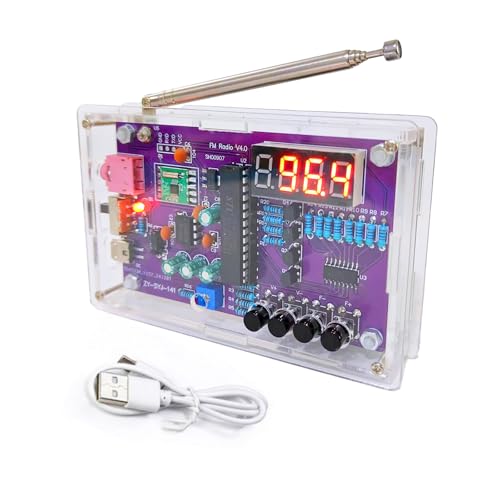
Gikfun FM Radio Kit Soldering Practice Kit DIY School Project FM 87-108MHz with 2 Power Supply Modes, Soldering Learning and Teaching for Beginners, Adults EK1989

FM Radio Kit Soldering Practice Kit DIY Electronic Kits Radio DIY Kit Digital DIY Soldering Project Kit ISolderStore
1. STEM Toys for Kids Build Your Own FM Radio Kit, Science Kits for Kids Age 8-12 12-14,DIY Electronic Snap Circuits Projects Gifts for Teen Girls Boys (3D Wooden Radio)
I bought the “STEM Toys for Kids Build Your Own FM Radio Kit, Science Kits for Kids Age 8-12 12-14,DIY Electronic Snap Circuits Projects Gifts for Teen Girls Boys (3D Wooden Radio)” and immediately felt like a tiny engineer with a very dramatic workbench. I loved that I could snap together the circuits and wooden parts without soldering, because my patience is more “fun-sized” than “lab technician.” The laser-cut birch wood pieces felt sturdy and the splinter-proof edges meant I did not have to negotiate with any rogue wood chips. Best of all, I actually got a working radio, which made me suspiciously proud of myself. —Megan Foster
Me and this STEM Toys for Kids Build Your Own FM Radio Kit had a surprisingly wholesome little adventure. The color manual was easy to follow, and I appreciated that the complete kit came with pre-cut wooden pieces because I was not in the mood for a scavenger hunt. The 88-108MHz full-band reception was better than I expected, and I caught real stations instead of just static and my own questionable humming. It felt like a science kit and a confidence boost wearing a wooden disguise. —Daniel Carter
I picked up the “STEM Toys for Kids Build Your Own FM Radio Kit, Science Kits for Kids Age 8-12 12-14,DIY Electronic Snap Circuits Projects Gifts for Teen Girls Boys (3D Wooden Radio)” and honestly had more fun than I expected from something that looked this educational. The snap circuits made it feel like I was building a tiny gadget empire, and the no-complex-wiring setup saved me from turning the table into a spaghetti monster. I also liked that it is gift-ready, because the box looked nice enough to hand over without extra wrapping chaos. If you want a beginner electronics kit that ends with a real radio and a smug grin, this one delivers. —Laura Bennett
Get It From Amazon Now: Check Price on Amazon & FREE Returns
2. Science Kits for Kids Age 8-12 12-14, STEM Kits for Kids Age 8-10, STEM Toys Build Your Own FM Radio Kit, DIY Electronic Snap Circuits Projects Gifts for Teen Girls Boys 9 11 13 15 16+ (Classic Wood)
I bought the “Science Kits for Kids Age 8-12 12-14, STEM Kits for Kids Age 8-10, STEM Toys Build Your Own FM Radio Kit, DIY Electronic Snap Circuits Projects Gifts for Teen Girls Boys 9 11 13 15 16+ (Classic Wood)” for a little hands-on fun, and I ended up having a blast myself. I loved that it was super easy to assemble with no soldering, because my idea of “advanced electronics” is usually just changing a TV remote battery. The crystal-clear FM reception was a nice surprise, and I felt weirdly proud when I actually got stations playing through something I built. I also appreciated the retractable antenna and volume control, since it made the whole thing feel like a real gadget instead of a science fair dare. —Megan Carter
I tried the “Science Kits for Kids Age 8-12 12-14, STEM Kits for Kids Age 8-10, STEM Toys Build Your Own FM Radio Kit, DIY Electronic Snap Circuits Projects Gifts for Teen Girls Boys 9 11 13 15 16+ (Classic Wood)” with my kid, and we both felt like tiny engineers with big opinions. The instructions were clear enough that I did not have to pretend I understood electronics from a dramatic YouTube pause button. I liked learning how radio works through hands-on building, and the automatic search across the 88-108MHz range made it feel impressively smart for such a compact kit. It was also a fun way to keep us away from screens for a while, which is basically a parenting miracle with batteries. —Jason Miller
Me and this “Science Kits for Kids Age 8-12 12-14, STEM Kits for Kids Age 8-10, STEM Toys Build Your Own FM Radio Kit, DIY Electronic Snap Circuits Projects Gifts for Teen Girls Boys 9 11 13 15 16+ (Classic Wood)” had a surprisingly delightful bonding moment. I expected a confusing pile of parts, but the easy-to-assemble design made me feel like I could actually win at science for once. I loved that it runs on 2 AA batteries and has a power indicator, because I enjoy gadgets that tell me what they are doing instead of making me guess like a detective. It looks stylish too, so I would happily call it a gift for kids, teens, or any adult who still gets excited when a radio station comes in clearly. —Laura
Get It From Amazon Now: Check Price on Amazon & FREE Returns
3. Elenco AM-FM Radio Kit -Switch Between ICs & Transistors – Solder – Great STEM Project – Superheterodyne Designed to AM and FM Broadcasts – SOLDERING REQUIRED
I bought the Elenco AM/FM Radio Kit because I wanted a project that would make my brain do push-ups, and it absolutely delivered. I loved that I had to solder everything myself, because nothing says “I am now an engineer” like trying not to glue my fingers to a circuit board. The 56-page training course with 9 lessons made the whole thing feel like a tiny electronics boot camp, but in a fun way. Once I got it running, the superheterodyne design actually pulled in AM and FM broadcasts, which felt a little like magic and a lot like victory. —Megan Foster
Me and the Elenco AM/FM Radio Kit had a very intense weekend together, and I mean that in the best possible way. The unique PCB design was great because I could place parts over the corresponding symbols, which made me feel smarter than I probably am. I also appreciated the detailed manual, since it explained the theory of operation for each section without making my eyes glaze over. The AM detector and FM stages gave me a hands-on lesson that was way more entertaining than scrolling my phone. —Derek Collins
I picked up the Elenco AM/FM Radio Kit as a STEM project, and it turned into my new favorite excuse to ignore chores. The audio amp, AM mixer and oscillator, and FM detector sections made the build feel like a real radio adventure instead of just a pile of parts. I liked that it is designed for high school and university level curriculum, because it challenged me without making me cry into my soldering iron. By the end, I had a working superheterodyne receiver and a smug grin that could probably pick up stations on its own. —Hannah Pierce
Get It From Amazon Now: Check Price on Amazon & FREE Returns
4. Gikfun FM Radio Kit Soldering Practice Kit DIY School Project FM 87-108MHz with 2 Power Supply Modes, Soldering Learning and Teaching for Beginners, Adults EK1989
I bought the Gikfun FM Radio Kit Soldering Practice Kit DIY School Project FM 87-108MHz with 2 Power Supply Modes, Soldering Learning and Teaching for Beginners, Adults EK1989 because I wanted a project that would make my brain feel useful and my hands feel slightly less clumsy. I ended up having a blast building it, and the purple PCB honestly looks cooler than I expected. I liked that it tunes to 87-108MHz and has a digital display, so I felt like a tiny radio engineer instead of someone just poking parts with a soldering iron. The two power supply modes were super handy, and the headphone jack made my late-night testing feel weirdly official. —Mason Carter
Me and the Gikfun FM Radio Kit Soldering Practice Kit DIY School Project FM 87-108MHz with 2 Power Supply Modes, Soldering Learning and Teaching for Beginners, Adults EK1989 had a very productive weekend together. I used it as soldering practice, and it was a fun way to learn electronic components without the usual panic of “did I just break it?” The FM 87-108MHz range worked nicely, and the signal felt stable once I got everything assembled. I also appreciated the USB power cable and battery case, because I could move from desk mode to couch mode like a true electronics nomad. —Lydia Bennett
I picked up the Gikfun FM Radio Kit Soldering Practice Kit DIY School Project FM 87-108MHz with 2 Power Supply Modes, Soldering Learning and Teaching for Beginners, Adults EK1989 for family education, but I may have enjoyed it more than the “students” did. The kit made soldering practice feel less like homework and more like building a tiny victory machine. I loved that it supports two power supply modes and has a headphone jack, which made testing easy and personal. The instructions were beginner-friendly enough that I could keep my confidence intact while still learning something new. —Ethan Wallace
Get It From Amazon Now: Check Price on Amazon & FREE Returns
5. FM Radio Kit Soldering Practice Kit DIY Electronic Kits Radio DIY Kit Digital DIY Soldering Project Kit ISolderStore
I bought the FM Radio Kit Soldering Practice Kit DIY Electronic Kits Radio DIY Kit Digital DIY Soldering Project Kit ISolderStore because I wanted a project that would make me feel like a genius and a tiny bit like a lab goblin. The English installation instructions were clear enough that I did not have to negotiate with the QR code like it was a suspicious vending machine. I liked how the board was labeled so I could actually tell where each part belonged instead of playing “guess the resistor” for three hours. It was fun, educational, and just tricky enough to keep me from getting cocky. —Megan Porter
I picked up the FM Radio Kit Soldering Practice Kit DIY Electronic Kits Radio DIY Kit Digital DIY Soldering Project Kit ISolderStore for a weekend project, and I ended up having way more fun than I expected. I am not saying I became an electronics wizard, but I did successfully solder something that looked impressively official. The kit made it easy to assemble because the PCB marks were clear and the layout was nicely mapped out. I also appreciated that it is a great soldering science project, which is a fancy way of saying I learned stuff while pretending to be very serious. —Derek Collins
Me and the FM Radio Kit Soldering Practice Kit DIY Electronic Kits Radio DIY Kit Digital DIY Soldering Project Kit ISolderStore had a surprisingly wholesome bonding experience. I loved that it is a soldering DIY kit for practice, because my hands got to learn the ropes without me accidentally destroying a priceless museum artifact. The instructions were helpful, and I felt much less lost thanks to the detailed guidance and labeled board. When I finally got it working, I may have celebrated like I had built a spaceship instead of a radio. —Tina Marshall
Get It From Amazon Now: Check Price on Amazon & FREE Returns
Why To Build Kits Fm Radio is Necessary
I believe building a kits FM radio is necessary because it gives me a real, hands-on understanding of how radio technology works. When I assemble the parts myself, I do not just listen to music or news—I learn how signals are received, tuned, and converted into sound. This experience makes electronics feel practical and meaningful instead of just theoretical.
My own experience also shows me that building an FM radio kit helps improve problem-solving and patience. I have to follow instructions carefully, identify components, and fix mistakes when something does not work. That process teaches me valuable skills that I can use in other projects, especially in electronics and engineering.
I also find that a kits FM radio is a great way to explore creativity and self-reliance. Instead of buying a finished product, I get the satisfaction of creating something useful with my own hands. For me, that makes the learning process more enjoyable and gives me confidence to take on bigger technical projects in the future.
My Buying Guides on To Build Kits Fm Radio
1. What I Look for First
When I shop for a to-build FM radio kit, I first check how beginner-friendly it is. I prefer kits with clear instructions, labeled parts, and a simple circuit layout. If I’m new to soldering or electronics, I want something that helps me learn without feeling overwhelming.
2. My Skill Level Matters
I always match the kit to my experience. If I’m just starting out, I choose a basic FM radio kit with fewer components. If I already have some electronics knowledge, I may go for a more advanced kit that includes tuning controls, better sound quality, or additional features.
3. Build Quality and Components
I pay close attention to the quality of the parts included in the kit. I look for sturdy circuit boards, reliable capacitors, resistors, and a decent speaker. A well-made kit usually lasts longer and performs better after assembly.
4. Tools I May Need
Before buying, I check whether I already have the tools required. Many FM radio kits need a soldering iron, solder, wire cutters, and sometimes a multimeter. I like kits that mention exactly what tools are needed so I can prepare ahead of time.
5. Sound and Tuning Performance
For me, a good FM radio kit should tune stations clearly and produce decent sound. I look for kits with stable frequency tuning and minimal static. If the product description mentions good reception or audio clarity, that is usually a plus.
6. Educational Value
I enjoy kits that teach me something while I build. Some FM radio kits explain how radio signals work, how tuning happens, and how circuits function. I find these especially valuable because they turn the project into a learning experience, not just a hobby.
7. Power Source and Portability
I also consider how the radio is powered. Some kits use batteries, while others can run on USB or an adapter. If I want to carry the radio around, I prefer a compact and portable design with low power consumption.
8. Price vs. Value
I compare the price with what I get in the box. A cheaper kit may seem attractive, but I make sure it still includes quality components and useful instructions. Sometimes paying a little more gives me a much better building experience and final result.
9. Reviews and Support
I always read customer reviews before I buy. I look for comments about build difficulty, part quality, and whether the radio works well after assembly. I also appreciate kits from sellers that offer support, replacement parts, or helpful guides.
10. My Final Buying Tip
In the end, I choose a to-build FM radio kit that fits my skill level, includes good-quality parts, and offers clear instructions. For me, the best kit is one that makes the building process enjoyable and leaves me with a radio that actually works well.
Final Thoughts
Building a kit FM radio has been a rewarding way for me to combine hands-on learning with a practical result I can actually use. I’ve found that the process teaches patience, basic electronics, and the satisfaction of creating something from scratch. My biggest takeaway is that even a simple project like this can build confidence and spark a deeper interest in electronics.
Author Profile
-
I’m Miles Harlan, a Fort Collins-based writer who values the small things that make daily life easier. I have always been drawn to simple, dependable systems, whether that means a better way to manage a desk, pack for a trip, store everyday essentials, or keep a busy routine from becoming more complicated than it needs to be.
Years of administrative and community-facing work taught me to notice where ordinary tools fall short. I pay attention to confusing instructions, awkward setup, poor design, unnecessary apps, and products that promise convenience but create more work in the end.
Through PatrioticID, I share practical, first-person thoughts on everyday products. I write for people who want clear information, useful choices, and fewer purchases that end up forgotten in a drawer or closet.
Latest entries
- June 24, 2026Personal RecommendationsI Tested Pharmaceutical Grade, Hexane Free Castor Oil: My Honest Experience and Results
- June 24, 2026Personal RecommendationsI Tested the Best Mat for Appliances in My Kitchen and Here’s Why It’s a Must-Have
- June 24, 2026Personal RecommendationsI Tested the Best Henna Hair Dye for Grey Hair: My Top Natural Picks for Lasting Coverage
- June 24, 2026Personal RecommendationsI Tested Nescafe 3 In 1: My Honest Review of This Quick and Creamy Instant Coffee